
By Brock
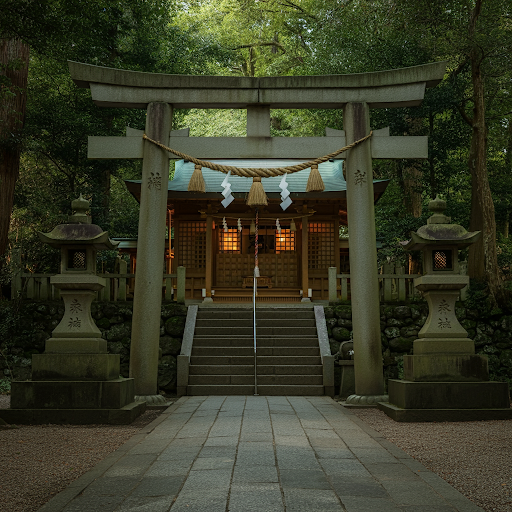
After a reflective month practicing Buddhism, I was ready for a new chapter. Buddhism had given me a lot to ponder—about inner peace, detachment, and the interconnectedness of all things. As August rolled around, I was excited to dive into Shinto, the spiritual path that would guide my journey through this month. The transition from Buddhism to Shinto felt natural, a new layer of understanding in the quest to connect more deeply with the world and myself.
Books I read in conjunction with Shinto
- Understanding Shinto: origins, beliefs, practices, festivals, spirits, sacred places
- The essence of Shinto: Japan’s spiritual heart
- The Tao of travel
- Confucius: The Analects
- Enduring identities : the guise of Shinto in contemporary Japan
- Chuang Tzu
- Tao Te Ching
Our lives were buzzing with change. I had been working tirelessly on finalizing the U.S. accreditation for the university I work for on the Turks and Caicos Islands—a process that was as demanding as it was crucial. The paperwork and meetings seemed endless, but I kept reminding myself that this was an important step for our institution. It would solidify my legacy there and give me a clear path to move on.
On the morning of August 1, I scribbled in my journal, “My goal this month is to spend more time in nature, to feel the spirit of Shinto.” I wanted to lean into the Shinto emphasis on harmony with nature and self-improvement. Hiking and swimming became my rituals. The trails were my sanctuary, and the pool was where I found moments of clarity, gazing at the clouds drifting above me. The natural world around me became a tangible reminder of Shinto’s reverence for the sacred in all things. Whenever someone asked me if I swam laps in the pool, I said “no, I swim back and forth slowly, and I look at the clouds.” I have found my best mediation during these moments.
Meanwhile, my anticipation for August’s new adventure was only heightened by the arrival of our foreign exchange student, Elli.
We’d made the decision months earlier to host a student, sensing that our family had space for one more. There wasn’t anything grand about it, just this quiet feeling that it was the right thing to do, and the right time to do it. As the weeks passed, the anticipation built—not in a big, dramatic way, but more like a hum in the background. By the time we went to meet her at the airport, it felt surreal. I was excited, but there were nerves too, wondering how this person we’d only heard about would fit into the rhythm of our lives.
From the moment we met Elli, we all adored her. She is shy, tall, and thoughtful—her presence both gentle and poised. And, she gives the best hugs. Instantly, that is what impressed me the most.
Despite her reserved demeanor, we quickly learned that she the type of person that just says “yes” to everything, her willingness a testament to her openness.
Understanding Shinto
One of the things I didn’t expect about practicing Shinto was how quietly it wove itself into my everyday life. Unlike Buddhism, with its structured meditations and practices, Shinto almost slipped in through the side window. I didn’t have to sit on a cushion or light incense at dawn; instead, I began to notice it in the smallest of moments. It was like Shinto was less about setting aside time for spirituality and more about letting spirituality set aside time for me.
There’s something deeply comforting about the way Shinto recognizes the sacred in everything. I’d spent July focusing inward with Buddhism, seeking stillness, and peeling back the layers of myself to get closer to the truth, whatever that might be. But Shinto was different—it wasn’t asking me to look within so much as it was asking me to open my eyes and see the sacred outside, in everything around me.
Kami, the spirits that exist in all things, had always seemed like an abstract idea when I first read about them. But once I began to open myself to the concept, Kami showed up everywhere. I found them in the familiar—the dining table where we gathered, sharing our day and asking questions about life. In the quiet corner of our sunroom where everyone likes to hang out and read. And even, surprisingly, in the bathtub. Somehow, my daily soak, a place where I have quiet and peace and tend to read the most profound books, had its own spiritual pulse. It turns out Kami aren’t just reserved for shrines and grand ceremonies; they reside in the everyday, the mundane. And I leaned into that—understanding that, in its own way, that sacredness was right where I needed it to be.
I didn’t have to work hard to make Shinto fit into my life—it was already there. Every step on the trail while I hiked, every cloud reflected in the pool, every sunset was a reminder of how nature holds the space for the divine, whether we recognize it or not. Maybe that’s the beauty of it. There’s no forcing Shinto. It doesn’t ask anything of you, except that you just be. Be open. Be present. Let life unfold and let yourself be a part of it.
Makoto, or sincerity, is another one of those core Shinto values that snuck up on me. I thought I understood what sincerity meant—being honest, straightforward, trying to live without pretense. But Makoto is more than that. It’s not just about honesty with others; it’s about integrity within yourself, aligning who you are with the world around you. It felt like a challenge at first—how do you live sincerely in a world that often feels like it’s pulling you in different directions? But then I realized that Makoto isn’t about perfection. It’s about presence. It’s about being fully in the moment, whether I was hiking alone with my thoughts or navigating the challenges of a busy day. Makoto felt like showing up for life exactly as I was, even if that meant not having all the answers.
Shinto didn’t impose itself on my days, nor did it demand devotion. Instead, it invited me to observe, to see, to honor what was already here. And as I did, I began to see how the rituals and the reflection were really just tools for appreciating the simple truth: life itself is sacred. In every laugh, in every anxious moment spent wondering if we were doing enough for the girls, in every mundane task—there was something holy at work. I didn’t need to control it, just notice it.
In hindsight, it wasn’t that I couldn’t connect to Shinto in the beginning—it’s that I didn’t realize how much it had already connected to me.
Major Challenges Begin
Just as I was beginning to settle into this new rhythm, life—being the unpredictable trickster it is—threw me into the chaos .
It started with the credit card. One moment, I was basking in a sense of calm, proud of the spiritual progress I thought I’d made. Sitting in one of my favorite restaurants, Tao. When I learned my credit card numbers were stolen. A wave of purchases racking up charges on the other side of the world. The entire dinner was spent talking to customer service going over transactions. I sat in that beautiful place watching my family enjoy some of my favorite food explaining to various customer service reps that I did not, in fact, spontaneously fly to Africa to splurge on a shopping spree. Even though that does sound like something we would do.
But life wasn’t done with yet. Oh no. It had another surprise brewing—this one waiting for me in Washington, D.C. Sixteen hotel rooms in my name. Sixteen. I wouldn’t find out until we arrived. More about this later.
And then there was Las Vegas, where I thought I’d been smart—savvy even. I’d listened to the timeshare reps, nodded along, believed their promises of a dreamy upgrade to our already great timeshare, something truly magical. Duped. Lied to. And the worst part? I let it happen.
Here’s the thing: in the midst of all this madness, it felt like I was being tested. Not in a cruel, cosmic way, but in that way life has of showing you what’s real when the ground crumbles beneath you. Shinto talks about Musubi, the unseen force that connects everything, binding life together. At first, I thought Musubi was this delicate, beautiful thread running through the universe, something to admire. Now, I wonder if it’s more like a knot—a complicated, tangled mess that you only start to understand when you’re sitting in the middle of your own unraveling.
I remind myself and my family often that “We can do hard things,” and let me tell you, it felt like I was doing hard things on repeat. As each of these things came up, I decided to stop fighting the tide. Go with it let myself float. Surrender to the waves. Musubi was there, in the chaos, pulling me back toward something deeper—reminding me that even in these overwhelming moments, there’s connection, purpose, and yes, maybe even a little grace.
Rituals and Family Dynamics
I’ve always carried a complicated relationship with my ancestry. Growing up, I believed in the myth of the brave pioneers—those faithful Mormons who endured hardship after hardship to carve out their place in the world. It was a story passed down in our family with reverence, a tale of grit and divine purpose. And I was proud of that lineage.
But something changed in my twenties. I started to really question the stories, peeling back the layers of what I had been taught. The more I learned about the history of the LDS church, the more I felt betrayed. It wasn’t the shining legacy I thought it was. My ancestors weren’t these heroes I’d always believed them to be—they were people, ordinary people who were manipulated by partial truths. They’d fought for something I no longer believed in. What do you do with that?
I greatly admire my grandparents, and my parents—they did the best they could within the framework they were handed.
I come from a long line of good people both living and dead. At the same time, I wish they had had the courage to question. I wish someone in my family had paused to say, “Wait a minute?” Maybe, just maybe, we wouldn’t have had to deal with this weight of doubt and unraveling later on.
It’s why, as I practice these different religions month by month, I’m constantly thinking about what I learn. Understanding both the good and the bad. I’m carving out a new path—not just for me but for the generations ahead. I want to understand, to question, to be open to what else is out there.
When I learned about ancestor worship in Shinto, there was a part of me that longed for that kind of connection, for a spiritual link to the past that felt clean, whole, untainted. The respect for those who came before is a fundamental part of Shinto, something that felt both foreign and familiar. But how do you venerate ancestors when your connection to them is tangled with feelings of disappointment and detachment? I’m guessing they feel the same about me.
I think about my ancestors a lot these days—what they knew, what they didn’t, what they chose to ignore. And it affects how I approach my own family now. The influence is subtle, but it’s there. I’m more aware of the legacies I’m creating. More conscious of the way belief systems and values get passed down, whether intentionally or not.
When my family didn’t come to my wedding, it carved a deep chasm in my heart, one I still feel from time to time. I thought I’d built up some resilience, convinced myself I had let it go, but grief has a funny way of lingering. In Mormonism, family is sacred, but only if you fit a certain mold, only if you look and act a certain way. In their eyes, I broke the mold. It is tragic for them, because one person going off the path means the entire family unit is now broken. Guilt all the way around.
My current family? They’re sacred because we love each other without conditions. There’s no roadmap for what we should be, no doctrines telling us how to act or who to be. Instead, we guide each other through mutual respect and conversation. We draw from the wisdom of different religions and build something that feels real, lived, messy, and right.
We’re not perfect. But we’re free to make mistakes, to grow together, to have the kind of difficult conversations that strengthen us. That, to me, feels like the essence of my family—one not defined by dogma but by love, resilience, and the choice to stay together, even when it gets hard.
Maybe my ancestors didn’t have that. Maybe they couldn’t see beyond the path they were on. But I can. I’m trying to honor them, not by following blindly, but by creating something new, something they might not have been able to imagine. I’m being the pioneer I thought they were.
Embracing Imperfection
Perfectionism was once a shadow that followed me closely. Growing up, I believed that if I could just do everything right—if I could be perfect in my faith, in my actions—then maybe, just maybe, I’d be “fixed.” There was a time when I thought perfectionism could cure me of my homosexuality, that following God’s plan flawlessly would somehow make me into the person I thought I needed to be.
It took years—decades, really—to unravel that belief. And though I’ve shed the heavy cloak of perfectionism, the whispers of it lingered until recently. Enter wabi-sabi, the Shinto concept that’s all about embracing imperfection, seeing the beauty in what’s broken and unfinished.
With wabi-sabi, I’m learning to see my life, my family, myself in a whole new light. The messy parts, the mistakes, the moments where things don’t go as planned—those are just as sacred as the picture-perfect ones. Wabi-sabi has become a reminder to let go, to stop striving for the unattainable, and to allow life to be beautifully imperfect. And, what a great name Wah-bee Sah-bee. I just want to sing it.
I’ve started applying this mindset to all the broken places in my life. The times when I felt like a failure. The way my relationship with my family fractured over my wedding, how they couldn’t show up for me because I didn’t fit into their mold of what a family should look like. And in those cracks, there’s something surprisingly tender. Something that makes me feel like maybe it wasn’t about being broken at all, but about finding wholeness in who I already am and who my family is.
My family now, the one I’ve built—not from religion, but from love and choice—this family is wabi-sabi in the best way. We aren’t perfect. We don’t try to be. But there’s beauty in the way we show up for each other, in the way we guide each other by conversation and compassion. We draw from all the good things, from all religions, and create a space where everyone’s imperfections are celebrated.
That’s where the real beauty lies. And I wouldn’t trade it for the world.
Washington DC Experience
In mid August, we decided to take Elli to see our nations capital. Our Washington, D.C., trip began with high hopes and grand plans. We were set to explore the city’s rich history, starting with the National Museum of American History. As my family wandered through exhibits showcasing the country’s past, I was tethered to my phone, battling an unexpected crisis.
It all started when I received a phone call asking if I would be checking into my sixteen hotel rooms. My heart sank as I realized the extent of the booking mishap. I had tried to book our accommodations online, but a glitch in the system had led to multiple, unconfirmed bookings. Each attempt, despite showing an error message, had actually processed a room reservation. And, when I had called customer service about the glitch, they said “just keep trying, it will come back online soon.” Sitting on an old bus in the museum, I had to explain to a bewildered customer service representative why I had apparently reserved sixteen rooms for a family of four. In a hotel we didn’t even end up staying at because I couldn’t get a reservation there! Now I know who booked up all the rooms.
The rest of the day was a blur of frustration and constant phone calls. I spent hours walking through the museum, my attention divided between exhibits and canceling rooms. The highlight of the museum visit should have been Dorthy’s Ruby slippers, but my mind was preoccupied with damage control. By the time we settled into a lovely restaurant that evening, my patience was wearing thin. I was still on the phone, working to undo the booking blunder, and my family’s patience was wearing thin, too.
In the midst of this chaos, I found myself reflecting on the Shinto concept of Musubi—the idea of connection and harmony. My frustration over the hotel mix-up felt disconnected from the serene and harmonious ideals I had been exploring. Musubi, which emphasizes the creation and nurturing of connections, reminded me to seek harmony even when things seemed out of balance. I tried to approach the situation with a sense of calm, though it wasn’t always easy.
I was lucky enough to be connecting with a kind customer service agent somewhere in Asia. She would giggle and say “OK Meester Hancaulk, I’m working on room number 16, it will be just a minute …” long pause, “Yay, we did it.” Long pause. “Ok, Meester Hancaulk, I’m working on room number 15…” and that is how the night progressed. I was grateful I was working with someone who found joy in their job.
The following day was a change of pace. We visited the National Gallery of Art and the Natural History Museum, where the cool exhibits offered a brief respite from the previous day’s stress. The art and natural wonders were a feast for the senses. As I wandered through the museums, I found joy in the works of art. I also was again shocked by how much I enjoyed being around large crowds of people. Like in Las Vegas, this felt more recharging than draining. A much different feeling than I was used to in crowds.
That night, we joined a nighttime tour of Washington, D.C. We saw the city’s landmarks illuminated against the night sky, each monument standing tall and serene.
Shinto, with its reverence for both the natural world and human achievements, finds a profound expression in the historic and symbolic weight of Washington, D.C. The city’s monuments and memorials serve as living embodiments of the values and struggles that have shaped the nation. In visiting these sites, I felt a deep connection to the past, much like the Shinto practice of connecting with the spirits of ancestors and deities. The profound sense of history and the celebration of human resilience at these monuments echoed the Shinto reverence for the sacred and the historical.
Of particular importance on this trip was our visit to the Martin Luther King Jr. Memorial, a place I had long wanted to visit. The inscription on the memorial—”Out of the mountain of despair, a stone of hope” —resonated deeply with me. It was a profound reminder of the resilience and hope that can emerge from even the darkest of times.
The MLK Memorial was a powerful experience. The solemn figure of King, carved from stone, seemed to embody strength and hope. As I stood in front of the monument, absorbing the weight of the inscription, I found solace. This was a moment of clarity, a chance to reflect on the Shinto concept of Kami—the divine presence in all things. The memorial, with its message of hope, felt like a sacred space where the divine and human experiences intersected. The representation of the struggle of black people in America makes is sacred, deeply sacred. This is true Kami.
Who’s to Say What is Good or What is Bad
Life has a way of testing you, over and over again, until you either crack under the pressure or realize that what feels like chaos might actually be working in your favor. When the timeshare scam unfolded, when my credit card was stolen and used across continents, and when I accidentally booked sixteen hotel rooms for our Washington, D.C. trip, each of these felt like disasters in the moment. Each of them was a curveball, an unexpected detour I hadn’t prepared for. And yet, as stressful as they were, something inside me kept whispering, “Who’s to say what is good and what is bad?”
There’s a famous story, one you’ve probably heard of, and one I have thought about often lately, of a man whose horse runs away. His neighbors all come to tell him how unlucky he is, and he just shrugs and says, “Who’s to say what is good and what is bad?” The next day, the horse returns, bringing another horse with it. The neighbors congratulate him on his good fortune, and again he says, “Who’s to say what is good and what is bad?” Later, his son tries to ride the new horse, falls off, and breaks his leg. The neighbors once again commiserate, but the man just repeats his refrain. And then a war breaks out, and because of the son’s broken leg, he is spared from fighting. The lesson? Life unfolds in ways we can’t predict. What seems like a catastrophe might actually be a gift in disguise, or at the very least, part of a larger picture we can’t yet see.
That’s how I felt, repeatedly, as I navigated through these challenges. Sure, I could dwell on the frustration, the mistakes, and the losses. But, if Shinto has taught me anything, it’s that life isn’t about labeling every event as good or bad, but rather accepting it all as part of the natural flow. There’s a Musubi, an interconnectedness, that runs through everything. What we see in the present moment is only a fraction of the whole story.
As the days passed, the hotel room debacle resolved itself, the credit card theft was handled, and even the timeshare, with all its deceit, became a source of learning. None of it was easy, but none of it was permanent, either. These experiences became part of my journey—lessons in adaptability, patience, and seeing beyond the immediate. The cracks in my plans, my expectations, even my self-control—they weren’t failures, but openings to something new.
Each challenge felt like it was pulling me down, yet somehow, things worked out, just like they always seem to. Maybe not in the way I originally envisioned, but in a way that brought me back to a sense of balance. It was never about controlling the outcome or trying to force a situation to be something it wasn’t. It was about leaning into the discomfort, letting it be part of the story, and trusting that in the grand scheme of things, the meaning would reveal itself in time.
Wabi-sabi, with its celebration of imperfection, helped me see the beauty in those moments when nothing went according to plan. Life, like the story of the man and his horse, has an unpredictable rhythm, one that you can either fight against or move with. And in moving with it, I found a kind of peace. Every time something felt like it was going wrong, I began to ask myself, “Who’s to say what is good and what is bad?” Because maybe, just maybe, it was neither. Maybe it was simply life, unfolding exactly as it was meant to.
Nature and Synchronicity
During this month, nature became my sanctuary. It wasn’t just a backdrop, but an active participant in my Shinto practice, guiding me back to a sense of center when everything else felt chaotic. The hikes through quiet, sun-dappled woods, the stillness of the trails where the only sounds were my footsteps and the rustling of leaves—it was like stepping into another world. Nature, in its raw, unpolished state, never judged, never asked anything of me. It simply was. And that was enough.
I’d often swim after these hikes, diving into the cool, calming water, staring up at the clouds as I floated on my back. The pool became another sacred space, another place where Kami seemed to reside. There was something powerful in surrendering to the water, letting it hold me as the world fell away. I began to see that these small moments, whether hiking or swimming, were as much a spiritual practice as any ritual or offering. They were moments of Chinkon—quieting the soul, finding stillness amidst the noise of life.
It wasn’t just about the peace, though. There were moments of synchronicity, too—these seemingly random events that felt like more than coincidence, like signs from the universe that I was on the right path. I remember one hike in particular. I was feeling overwhelmed by everything—work, family, the weight of the challenges we’d been dealing with. I hadn’t even planned to go for a hike that day, but something pulled me outside. As I walked, I came across a deer, standing in the woods on the opposite side of the road from me. It was so still I almost didn’t see it. Then, it walked out on the road and started traveling with me. I told that deer all about my day. It was a good listener, before it found some lovely Hostas in a neighbor’s yard and detoured to eat them. I enjoyed the conversation, even if the deer was just looking for food while walking with a stranger.
Through these experiences in nature, I found a kind of resilience. The trees, the water, the deer—they all seemed to say the same thing: Let go. Stop trying to control everything. Life, like nature, has its own rhythm, its own flow. You can fight against it, or you can surrender to it and find peace in the process.
These moments became a reminder that life isn’t always about grand gestures or massive shifts in perspective. Sometimes, the biggest lessons come from the quietest places, from simply walking through the woods or floating in a pool, allowing the world to show you that you’re exactly where you need to be.
Welcoming Layla
We had always said we weren’t going to get a dog. Not since our last dog of 14 years passed away the year before. That was the rule, the line in the sand. Dogs meant chaos, responsibility, chewed-up shoes, and too many walks. But, as with most things in life, those lines we draw have a way of blurring over time. I had felt this pull, this gentle nudge in my chest, for a few weeks—like a whisper from somewhere deep inside me, or maybe from somewhere beyond me. It wasn’t loud, but it was persistent: “It’s time.” “The girls need a dog.” “You need a dog.”
I didn’t know why the timing felt right, but it did. Something in the air shifted, and I found myself on a mission. The day we went to the shelter wasn’t even planned. We’d seen a dog online that we thought might be a good fit, but when we met her and took her for a walk, it became clear she wasn’t ours. It wasn’t anything wrong with her, she just wasn’t the one. And then Olivia reminded us about Layla.
We had seen her picture online too, but we’d dismissed her because—let’s face it—raising a puppy is a whole different kind of commitment. Puppies chew, puppies have accidents, puppies don’t sleep through the night. At least, that’s what we told ourselves. But when Olivia said, “Let’s take Layla for a walk,” there was nothing to lose in a walk.
The moment that leash was in my hand, I knew. And it didn’t take long for all of us to look at each other and say the same thing. “She’s ours.” There was something about her—calm but curious, sweet but independent—that just fit. The shelter had warned us that she wasn’t house-trained, but that turned out to be completely untrue. Layla came into our lives fully house-trained, sleeping through the night, never destroying a thing.
Welcoming Layla into our home felt like more than just adopting a dog. It felt like an opening, an expansion of our family at a time when we were already welcoming someone new—Elli. In the span of a month, we had opened our doors and our hearts to not just one, but two new members of our little tribe. And I couldn’t shake the feeling that this wasn’t an accident. This was timing, synchronicity, the universe telling us that our family had room for more. These two beings were meant to come into our lives right now.
In Shinto, there’s this deep belief in the interconnectedness of all things. It’s not just humans who are sacred, but animals, trees, mountains, and even rocks. The idea of Musubi—the force that connects and binds everything in the universe—felt so present in those moments. Elli and Layla didn’t come to us randomly. They came because something inside of me, something that I didn’t fully understand, had whispered, “It’s time.“ They were always meant to be part of our lives, and we were ready to welcome them with open arms.
Eastern beliefs often talk about this kind of flow—this surrender to the natural rhythm of life. In Buddhism, there’s a teaching about non-resistance, about not forcing things to happen but allowing them to unfold. And that’s what this felt like. We hadn’t gone looking for Elli or Layla. We hadn’t planned for this big expansion of our family. But when the moment came, when the feeling inside said, “Now,” we listened.
And as chaotic as it all could have been—bringing a shy exchange student into our home, raising a puppy alongside two already-busy kids—somehow it wasn’t. It was peaceful, in its own messy, beautiful way. Layla fit in from the first moment, as though she had always been here. And Elli, with her quiet presence and magic hugs, felt like she was always meant to be part of us too.
Looking back, it all makes sense now. The universe works in ways we can’t always predict, but when we stop resisting and start listening, the right things and the right people have a way of finding us. And as much as we might want to plan and control everything in our lives, the truth is, sometimes the best things come when we least expect them—when we simply open our doors and say yes.
Reflections
As I look back on my month of living Shinto, I can’t help but marvel at how the quiet, often subtle practices of this ancient tradition have woven themselves into the fabric of my daily life. At first, I struggled with connecting to it—there was no defined scripture or dogma to follow, no rigid structure to lean on. But as the days passed, I found myself leaning into the simplicity, the reverence for nature, and the deep respect for the unseen forces that shape our world.
As much as I found peace and wisdom in Shinto, I couldn’t ignore the complexities that come with it, like any tradition with deep historical roots. One of the more difficult aspects for me was learning about its history of excluding women from certain rituals and sacred spaces. It’s a tension I’ve felt before, the pull between the beauty of a spiritual path and the discomfort of its limitations. Shinto, like many religions, has evolved, but it hasn’t fully shed these exclusionary practices. Still, I’ve found that it’s possible to hold both truths—recognizing the value it brought into my life this past month, while acknowledging that it, too, has its blind spots. Not everything is perfect, and maybe that’s the point—wabi-sabi all over again, the imperfect and the beautiful coexisting.
Shinto taught me to look beyond the obvious, to find the sacred not just in shrines or rituals but in the everyday. I felt the presence of something divine in the moments of stillness, in the messy exchanges with the family, and even in the chaos of adopting Layla. Shinto gave me a new lens through which to view my life—one where everything has a spirit, where everything is connected, and where everything, even the challenges, is part of a greater balance.
I’ve come to understand that Kami are not sacred merely by their nature but because we, as individuals and communities, imbue them with our reverence and intention. Just as I’ve always felt a profound connection to cathedrals, temples, and churches, places where the sacred feels tangible and vivid, I now see that the essence of Kami is similarly shaped by our own acts of respect and devotion. Whether it’s a grand shrine or a quiet corner of our home, the sacredness of these spaces is created by the way we engage with them. Our ceremonies, our quiet moments of reflection, and the simple act of paying attention transform these spaces into vessels of spiritual significance. In this way, Kami become sacred because we choose to make them so, through our mindfulness and our presence. This insight has deepened my appreciation for the ordinary places in my life, revealing that holiness often resides in the everyday, in the spaces and moments we actively choose to sanctify.
The biggest personal growth this month came from learning to trust that balance. I used to think that everything had to be perfect—that if I could just control every aspect of my life, it would all work out. But Shinto, and particularly the concept of wabi-sabi, showed me the beauty in imperfection. It’s in the broken places, the unexpected twists, the things that don’t go according to plan that we find growth. The timeshare disaster, the credit card theft, even the chaos of booking 16 hotel rooms—they all served as reminders that life can’t be controlled, and that’s okay. In fact, that’s where the magic happens.
I’ve come to see that resilience isn’t about pushing through or fighting against what’s happening, but about embracing it, letting it shape you in ways you couldn’t have anticipated. This month taught me that. I found peace in the messiness of life, a sense of calm in the chaos, and a deeper understanding of what it means to live with intention.
As for the future, I don’t think Shinto will simply be something I leave behind as I move into the next month of this journey. Its teachings—particularly the reverence for nature, the acceptance of imperfection, and the quiet acknowledgment of the divine in all things—are ones I intend to carry with me. My practice may not be formal, but the insights I’ve gained will continue to guide me.
Looking ahead, my goal is to lean even more into this idea of flow, of letting life unfold rather than trying to force it into shape. I want to remain open to the whispers, to the pulls that guide me to new experiences and people, like Elli and Layla. Shinto has taught me to trust those nudges, to see them as the universe’s way of guiding me towards what I need, even if I don’t fully understand it at the time.
And perhaps most importantly, I want to continue finding the sacred in the small, the everyday moments. Shinto has shown me that you don’t need a grand ceremony to experience the divine—you just need to pay attention. Whether it’s sitting at the dining table, walking in the woods, or watching Layla nap in the sun, there’s a quiet divinity in all of it. And if this month has taught me anything, it’s that life is richer, fuller, and far more beautiful when you can see it that way.
The journey continues, but Shinto has given me a profound sense of peace as I move forward, trusting that the path ahead will reveal itself in time. All I have to do is listen.
Leave a Reply