

On The Outside, Looking In
by Valerie
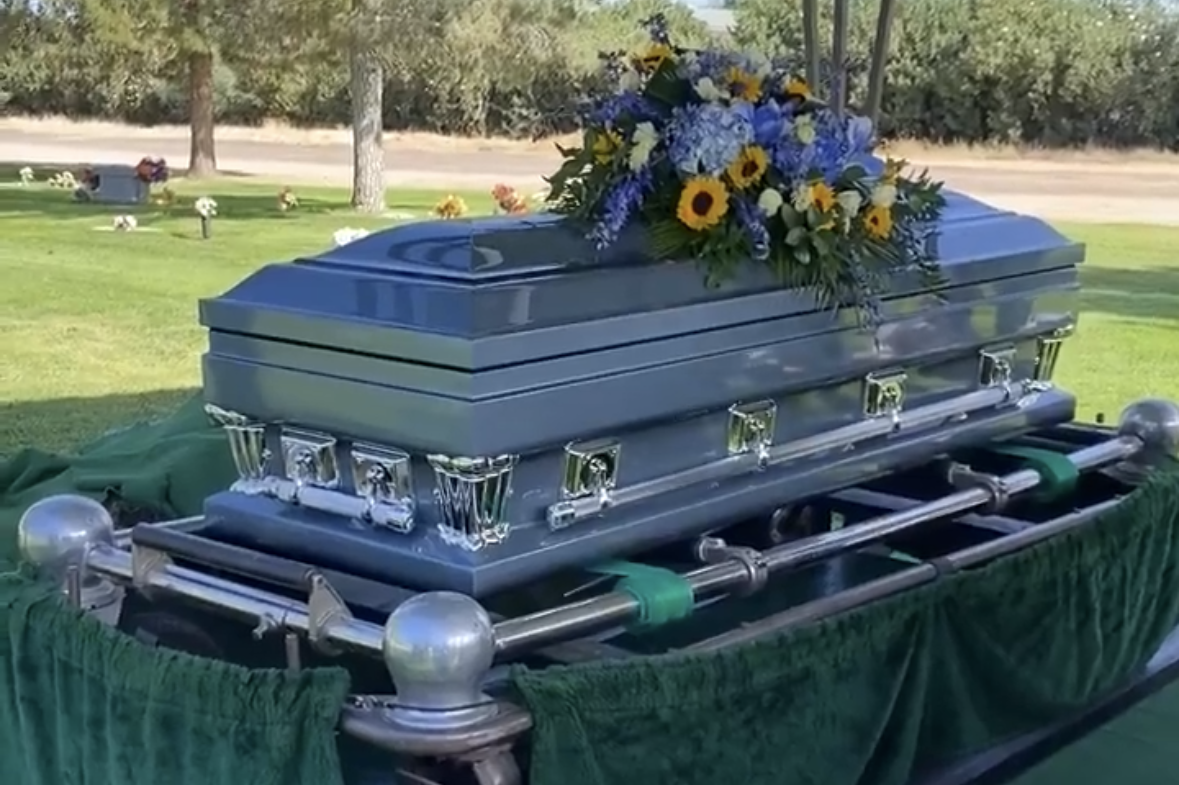
Mormon funerals used to be so ordinary to me. It’s a church service. We start with a song and a prayer. A male church leader “presides”. Life story is given by someone close to the deceased, then there’s a special musical number with no applause, then a doctrine-based talk by someone close to the deceased, then another musical number, then another doctrine-based talk by whomever is presiding, then a closing song and prayer. Then we all adjourn to the cemetery, where there’s another prayer (this time, a dedication of the grave by a man who has the priesthood), and then maybe another song. Then we all head back to the church where the women of the deceased’s congregation have prepared a meal for the family.
As an insider, there were a lot of tears that I attributed to the “spirit”. I felt peace and comfort in the certainty of the doctrines taught, and while it was always exhausting, it felt familiar and comforting.
Everything about funerals changed for me when my mom died in 2021, and I started to feel like an outsider.
At the time, I was deeply struggling with my faith. I wanted so badly to stay “in”, to stay connected to my family through our shared religious beliefs and traditions. But I had serious doubts and questions that had no answers. And I was growing increasingly uncomfortable with the history, doctrines, and policies of my inherited faith tradition. I also knew that a few members of my family either had already left the faith or had shared with me that they had similar concerns. I knew I was not alone in my shifting faith.
The funeral proceeded as they usually do, with the outline previously mentioned. I had many, many tears, some of which were for the loss of my mother, and others for the loss of certainty as to her eternal fate.
The real discomfort for me came when my uncle gave the doctrine talk. My uncle, who has been gentle, kind, loving, and accepting my entire life gave a strongly worded hellfire and damnation talk, explicitly declaring that if those of us who were wayward didn’t get our act together, we would never see my mother again.
I was deeply, deeply wounded at a time that I needed healing and love and acceptance and reassurance. That talk, as many hellfire and damnation talks, had the opposite effect of the one intended. It served only to push me further from my faith and from my family.
Why am I writing about this now?
Two weeks ago, two and a half years after his talk and 18 months after stepping away from the church, I attended that uncle’s funeral. And it was a vastly different experience.
I attended that funeral on purpose, out of a deep and abiding love for my aunt and my cousins, some of the very best people I know. My beliefs, while still in flux, are no longer conflicted about the church. I am decidedly not a believing Mormon. So attending my uncle’s funeral would not hold the same confusion and desperate hope I had at my mom’s funeral. The only thing I really worried about was whether or not I would be physically able to open my mouth in song for the family musical number, and sing words I no longer believed. Music had been such an important part of my worship, I was worried that it would be triggering for me to sing, “Thee will I honor, praise, and give glory…”
A few absolutely beautiful things happened.
- No one spoke hellfire and damnation. And everyone spoke of love, hope, redemption, and grace. That was a message I could get behind.
- I stood and sang with family that I love more than anything, and my heart filled with love for them. The words brought peace to them, and my participation was a demonstration of my deep love. I felt nothing but love.
- I listened to the doctrines as an outsider, holding space for people I love to grieve and celebrate the life of a good man in the tradition of their family. This might sound sad. But I found it beautiful. No longer being attached to the belief system, I can appreciate the way that their funeral rituals brought them peace and comfort in a painful time. They honored him according to their customs and culture, as millions of other religious and non-religious people have done since the dawn of humanity. Our rituals are sacred ways to move through grief. And this is how Mormons do theirs.
Being an outsider isn’t as terrible as I thought it would be. I had some tough moments showing up with my non-believing self, but overall the experience was positive. I never imagined I would be an outsider in my own faith tradition. I believed I would always pine for the certainty and familiarity of the church. But I have experienced so much life in the years since my mother’s funeral, and I am at peace. The world is a big, beautiful, messy place, and my life is a big, beautiful, messy life. I love where I am and who I am. And I can give space for others to love where they are and who they are.
As far as me and the church are concerned, the best view is outside looking in.
Leave a Reply