
By Brock
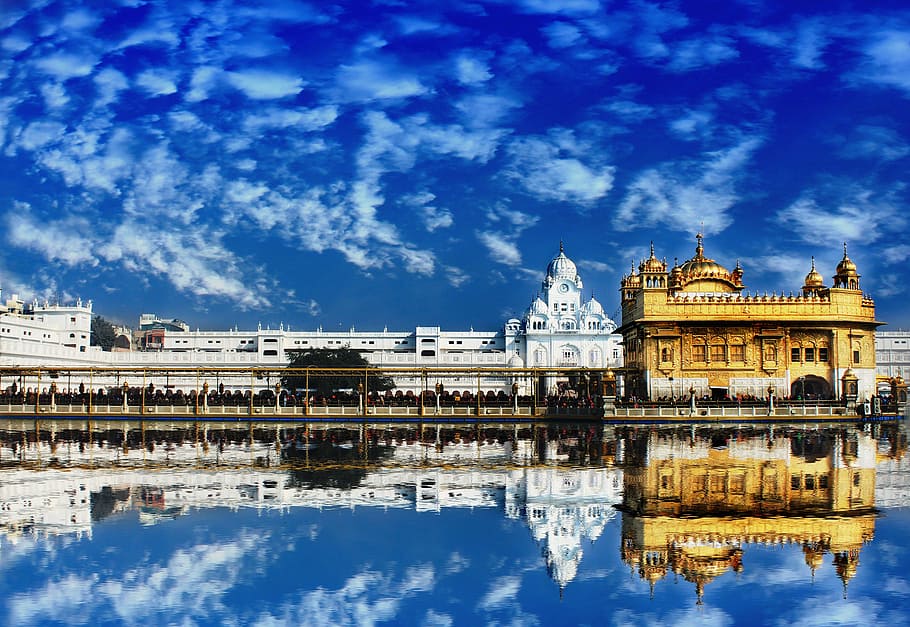
January, with its gentle Islamic introspection, had felt like a deep, tranquil breath. It was quiet, subdued, and wintery. Then, February arrived, a sudden, exhilarating gasp – the vibrant, dynamic energy of awakening of spring and Sikhism. It wasn’t a gradual shift; it was a revelation, like discovering a hidden garden bursting with life, where the scent of spices and the sound of devotional hymns filled the air.
A note: Sikh is pronounced like “sick.” However, due to the negative connotations associated with that pronunciation in English, many adherents of this faith are comfortable with the pronunciation “seek.”
Sikhism and Its Beginnings
Rooted in the 15th-century Punjab region (Northern India), Sikhism began with a moment of profound transformation. Guru Nanak, after disappearing into a river for three days, re-emerged with a powerful declaration: ‘There is no Hindu, there is no Muslim.’ In a time when rigid religious identities defined every aspect of life, this was a radical statement. It was akin to saying, ‘There’s no Democrat or Republican, no Black or white, no rich or poor.’ He cut through the labels that perpetuate division, revealing truth of their shared humanity. This message of unity and equality, along with the core tenets of belief in one God (Ik Onkar), the teachings of the Gurus in the Guru Granth Sahib (their scriptures), equality, selfless service (Seva), and the constant remembrance of God (Simran), formed a compelling spiritual foundation for my month.
The “wintering” of the last few months felt like a period of quiet, passive contemplation. This month, that gave way to an inner flourishing. This month helped my soul feel alive again. It felt like a seed, nestled in the earth, suddenly sprouting, eager to absorb the light.
My Journey
In my journey through Sikhism, one profound truth has resonated above the others, the liberation that comes from shedding the labels. Whether it’s label of religion, the place of our birth, or increasingly, the political affiliation we so fiercely defend, these tags often serve as walls, dividing us from the shared humanity. Nowhere is this more evident than in the rigid lines drawn between “republican” and “democrat.” These are identities we cling to with a fervor that often eclipses our common ground. Sikhism gently nudges us to look beyond these self-imposed boundaries, to recognize the inherent worth in every individual, regardless of their chosen banner. This initial glimpse into the Sikh worldview hints at a powerful principle: the willingness to stand up for justice and righteousness, not just for those who share our own affiliations, but for all. This concept, which we will explore in greater depth later, challenges us to broaden our circle of compassion and action.
The Gurus
The ten Gurus of Sikhism were spiritual leaders whose teachings form the foundation of the faith. While each offered invaluable lessons, I found particular inspiration in the examples of a few:
- Guru Nanak Dev: The founder of Sikhism, lived in a time of deep religious division. He traveled extensively, sharing a message of the importance of living a truthful life. His message meant that all people were equal in God’s eyes, regardless of their background, a revolutionary concept for his time, especially among the caste system of India.
- Guru Arjan Dev: Made a lasting contribution by compiling the Adi Granth, the first official scripture of Sikhism. This collection of hymns and teachings preserved the wisdom of the Gurus and made it accessible to all. Tragically, his unwavering commitment to his faith came at a great cost. The Mughal Emperor, intolerant of his beliefs, ordered his torture and execution. Legend says, he was made to sit on a giant hot plate, and hot sand was poured over him. He was martyred for refusing to renounce his beliefs.
- Guru Hargobind: Introduced the concept of Miri and Piri, the harmonious integration of spiritual and temporal authority. He wore two swords, symbolizing this balance, signifying that Sikhs should be both spiritually devoted and socially responsible, ready to defend the oppressed and uphold justice. This balance between cultivating inner peace and engaging in outward action is a lesson I’m actively striving to internalize, especially in a world that often feels chaotic and unjust.
- Guru Tegh Bahadur: Is remembered for his ultimate sacrifice in defense of religious freedom. He stood against the injustice of local Hindus being forcibly converted to Islam, choosing martyrdom over compromising his principles. His actions demonstrated that protecting the rights of others, even those with different beliefs, is a moral imperative. His example resonates deeply in today’s polarized climate, reminding us of the importance of standing up for justice.
- Guru Gobind Singh: Transformed the Sikh community by creating the Khalsa, a group of initiated Sikhs committed to upholding the principles of their faith. He instilled in them a spirit of courage and service, emphasizing the importance of defending the vulnerable and fighting against injustice. The Khalsa’s distinctive appearance, with the turban and other articles of faith, serves as a constant reminder of their commitment. This concept of the ‘warrior way’ isn’t about aggression; it’s about the fortitude to champion what is right. He taught that peace and strength are not opposites, but necessary complements, two sides of the same coin.
Chardi Kala
Chardi Kala is the beautiful, indomitable spirit of optimism and resilience. It’s acknowledging life’s adversities while maintaining unwavering faith and a positive outlook. This was one of the ideas that drew me so deeply in to this religion this month. With our volatile political government, it was easy to feel fear and hopelessness.
It is a state of mind that allows one to face difficulties with courage and grace, knowing that the divine is ever-present. This mindset, the ability to sustain hope and fortitude, is vital in these challenging time. It is easy to find reasons to despair, with the constant barrage of negative news and social media. However, Chardi Kala provides optimism in the face of adversity. It is moving forward by combating injustice while resting peacefully, knowing that you will be well, regardless of what occurs. This sense of serenity has become one of my most cherished blessings. As I move towards confronting injustice, I have accepted that I will be well, regardless of the outcome. I can lose my house, and all my things. I just pray that my family can be together through it all, and those I love remain safe. Most of all, I want to make sure those around me are well taken care of, regardless of their labels.
The Five Virtues
The Five Virtues include; Sat (truth), Daya (compassion), Santokh (contentment), Nimrata (humility), and Pyaar (love). These were not abstract ideals but practical tools for navigating life’s complexities. Sat (truth) served as a mirror, prompting introspection and self-examination. Daya (compassion) broadened my empathy, allowing me to connect with the suffering of others. Santokh (contentment) taught me to appreciate the present moment, finding joy in simple blessings. Nimrata (humility) grounded me in the understanding that I am part of something greater than myself, fostering a sense of interconnectedness. And Pyaar (love), the unifying force, reminded me that connection is essential, the antidote to isolation. By practicing these virtues, I became more mindful of my thoughts, words, and actions, striving to live a life that reflects my deepest values.
This month marked a significant shift from passive learning to active engagement. I was drawn to the Sikh emphasis on translating faith into tangible service and advocacy. This move from “being” to “doing” felt liberating, a call to participate in the world.
Turbans and the Five Ks
All Sikh men wear turbans, the dastar. This sacred article of faith represents honor, self-respect, courage, spirituality, and piety. However, it has also become a symbol of misunderstanding and prejudice. After the tragedy of 9/11, a Sikh man in Mesa, Arizona (where I was living at the time), became the first victim of retaliation. This incident underscored the devastating consequences of ignorance and prejudice. The Sikh community, rather than retreating, chose resilience, continuing to practice their faith and embody peace and compassion.
Beyond the turban, Sikhs wear other articles of faith known as the Five Ks: Kesh (uncut hair and the primary reason they wear the turban), Kangha (wooden comb), Kara (steel bracelet), Kirpan (sword), and Kacchera (special undergarment). These are physical reminders of commitment, discipline, and the warrior spirit.
Langar
A langar is a free community kitchen – a radical act of love and equality. In a world focused on scarcity and division, Sikhs offer abundance and inclusivity. Everyone is welcome, regardless of background or belief. Volunteers prepare and serve meals daily or weekly, creating a space for shared humanity. Sharing a meal with anyone who comes is a beautiful expression of love and service. The dedication and selfless service involved in langar are deeply moving. In an age of social media echo chambers that isolate individuals, such shared meals offer a vital space for connection and community.
Sarbat da Bhala – The Welfare of All
At the heart of the Sikh ethos lies the principle of “Sarbat da Bhala,” a phrase that encapsulates an expansive vision: the welfare of all. It calls for a deep concern for the well-being of every single being, transcending the narrow confines of self, family, community, or even religious belief. This principle demands a constant striving for justice, equality, and the upliftment of all, even those who may hold different beliefs or come from vastly different backgrounds.
The Sikh Gurus themselves exemplified this commitment through their actions and teachings. They stood against oppression and fought for the rights of the marginalized, often at great personal cost. They protected the vulnerable, even when those they defended did not share their faith. History is replete with instances where Sikhs have stood shoulder to shoulder with those facing injustice, offering aid and protection without expectation of reciprocation or adherence to their own beliefs. This willingness to fight for others, irrespective of their labels, stems from the core understanding that humanity is interconnected and that the suffering of one diminishes us all.
Misunderstood
It is a tragic irony that despite this deeply ingrained principle of universal welfare, Sikhs are often misunderstood and sometimes tragically mistaken for terrorists. This mischaracterization could not be further from the truth. The Sikh faith champions peace, justice, and selfless service. The turban and beard, symbols of their faith and commitment to justice and equality, have been ignorantly conflated with extremism, causing immense pain and injustice to a community dedicated to the betterment of all.
In these intensely political times, the Sikh principle of Sarbat da Bhala offers an elegant antidote to the divisive rhetoric that often dominates public discourse. It reminds us that our shared humanity is far more significant than any political label and that true righteousness lies in our willingness to fight for what is right, simply because it is the right thing to do, regardless of who benefits. This is the essence of living a life guided by Sarbat da Bhala.
Seva (Selfless Service)
The concept of “Seva,” or selfless service, takes the principle of Sarbat da Bhala to an even deeper level of practical application. While the Golden Rule encourages us to treat others as we wish to be treated, Seva transcends this reciprocal notion. It embodies the act of giving and serving without any thought of what we may want. It is about identifying the needs of others and fulfilling them with complete humility and without any thought of personal gain. This “thoughtless service” is not merely about performing tasks; it is about cultivating a mindset of selfless dedication to the well-being of others.
Seva cultivates empathy and breaks down the barriers of “us” and “them.” By focusing on the needs of others without the filter of our own desires or expectations, we move closer to a truly selfless existence. It is the embodies the highest ideals of human compassion and contributes to the welfare of all. This is the transformative power of Seva.
Next
This month with Sikhism was a turning point, reigniting a fire of courage, service, and hope. A sense of synchronicity, a feeling of positive energy, returned. Something that had been missing since the hurricane many months ago. It is hard to explain what this sense of synchronization is, but it permeates almost every aspect of our lives.
I’ve learned that faith is not a passive belief but a call to action, a delicate balance of cultivating inner peace and engaging in outward strength. One of the greatest gifts received during all of this is the ability to sleep at night with such peace, calm and hope. The gift of Chardi Kala. Even though I know the world is not OK, I believe that no matter what happens, we will be.
My path now diverges from the well-trodden trails of organized religion. I am glad that Sikhism was my last stop on that train.
Leave a Reply