
By Brock
On October 1st we decided it was time to venture out of neighborhood and see what had happened. Leaving our bubble was like stepping into another world. We knew the storm was big, but without power, internet and limited phone service, we were still in the dark about how bad things were. We thought it was going to be like previous storms, but a little worse. We braced ourselves for some flooding, maybe a downed power line or two. But nothing could have prepared us for what we saw. It was as if nature had unleashed its full fury on the areas just outside our unsuspecting neighborhood.
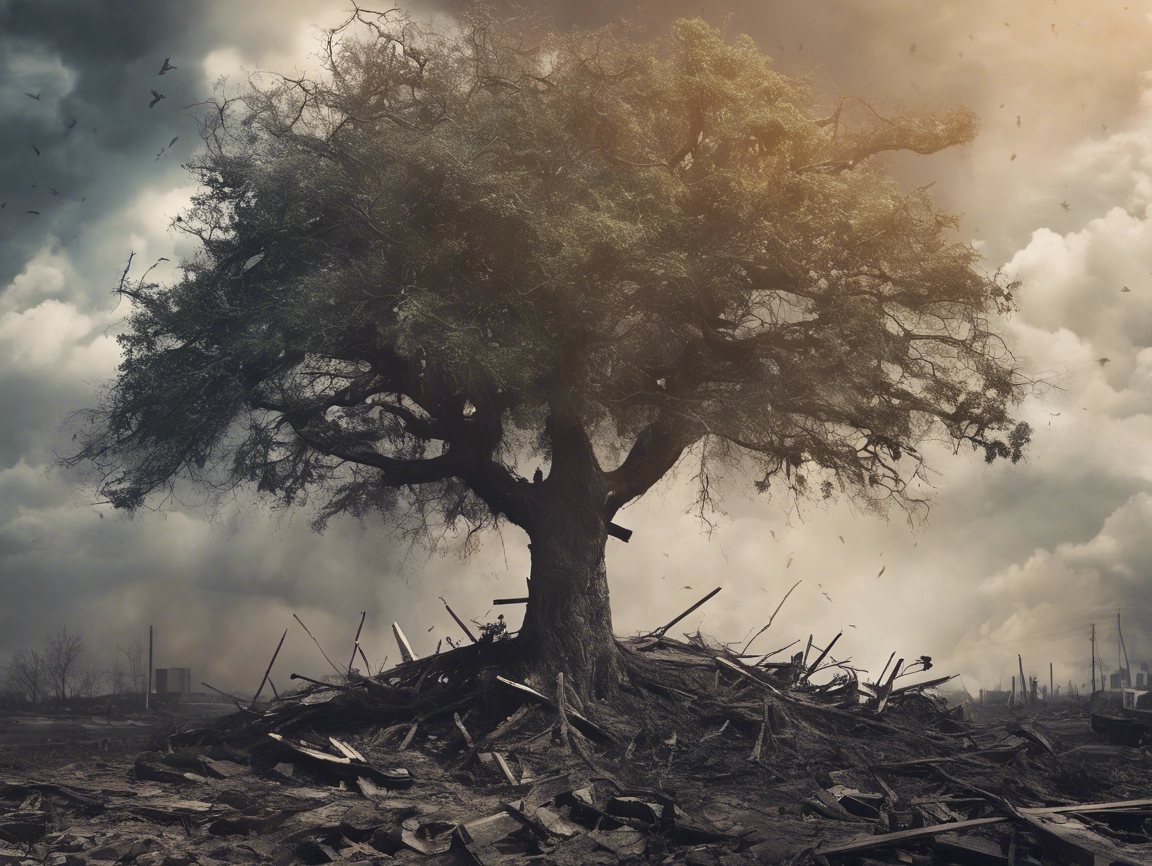
The sheer scale of the destruction was staggering. Millions of trees lay sprawled across the landscape, once proud giants reduced to mangled wreckage. Some broken in half, others pulled up roots and all. Power lines weren’t just down; they were broken in half or ripped from their moorings, twisted into grotesque shapes, and wadded into impossible tangles like discarded Christmas lights. It was a scene of utter chaos.
Despite the overwhelming destruction, signs of resilience were already evident. Crews had been working tirelessly, clearing paths through the debris. Most roads had at least one lane open, though progress was slow. We inched forward, waiting our turn to navigate the precarious passages, often with just inches to spare between our car and the towering piles of debris. The air was thick with the smell of damp earth and pine needles, a strange mix of natural and unnatural scents that spoke volumes about the catastrophe we were witnessing.
Emerging from that bubble of ignorance into this reality was a jarring experience. The realization hit hard – this wasn’t just a few fallen branches and a power outage; this was devastation on an apocalyptic scale. It was obvious that it could be a very long time before we had power, internet, or food from a grocery store. Seeing the world outside our windows, transformed into a scene from a disaster movie, drove home the point that life as we knew it had changed, and we needed to adapt. We decided to take the girls to Kentucky where John’s parents were. The girls needed some stability, and John had been extremely stressed about his job.
The next day, we felt a surge of relief finding the freeway into Asheville open. However, that relief was short-lived. Even though we could use the freeway for the first 10 miles or so, it was slow going. The landscape surrounding the freeway was a testament to Helene’s fury. Downed trees lined the roadside, debris was scattered everywhere, and evidence of flooding was still visible in the saturated ground and swollen creeks. It felt like driving through a warzone, the freeway a narrow ribbon of normalcy cutting through a devastated landscape.
Once we reached Asheville, all freeways heading west and north were closed. It was a sobering sight. We felt trapped, the way forward uncertain. There was one small, winding road snaking its way out of the city towards Tennessee. It was our only option.
Progress was slow. Adding to the surreal atmosphere, we passed convoys of electric trucks, their logos a patchwork of utility companies from across the country. They were heading towards Asheville, bringing much-needed manpower and equipment to aid in the recovery effort. It was a heartening sight, a reminder that we weren’t alone in this.
Hours later, we crossed the state line into Tennessee. The tension began to ease, replaced by a growing sense of exhaustion and disbelief. When we finally stumbled upon an open grocery store, it was like entering another dimension. The brightly lit aisles, stocked with everyday necessities, felt jarringly out of place after the chaos we’d witnessed. Ordinary people went about their shopping routines.
Seeing this slice of normalcy was surprisingly emotional. We wandered the aisles, overwhelmed by the sheer abundance of food and supplies. We ended up buying far more than we needed, driven by a primal urge to stock up, to regain some sense of control in a world that suddenly felt very precarious.
“Did you come from North Carolina?” One cashier asked. They seemed to recognize something in us, maybe it was the blank expressions.
The rest of the drive to Kentucky was uneventful, a welcome reprieve from the stress and uncertainty of the past few days. The rolling hills and green pastures of the Kentucky countryside were a balm to our weary souls. Being in a normal setting, surrounded by the familiar sights and sounds of everyday life, felt strangely surreal, a stark contrast to the devastation we had left behind.
Reaching John’s parents’ house in Kentucky was like finding an oasis in the desert. Their home was untouched by the storm, a haven of normalcy and comfort. It was such a relief to be somewhere safe and familiar, surrounded by loved ones.
Those few days with John’s parents were a much-needed respite from the chaos and stress. We were able to relax, recharge, and process for a bit. Simple things, like ice, turning on a light, and taking a clean shower, felt luxurious after the past few days.
One evening, we went out to eat at a local restaurant. Sitting at a table, surrounded by the chatter of other diners and the clinking of glasses, felt ethereal. It was nice to have a sit-down meal, served on real plates, and to enjoy the simple pleasure of someone else cooking for us. But, it didn’t feel real, lasting.
Despite the relative calm of his parents’ home, it was surprisingly difficult for John to work. Even though he was accustomed to working remotely, the usual rhythm of his workday was completely disrupted. Being surrounded by family, with the constant buzz of activity and concern, made it hard to focus. Every phone call, every news update, was a reminder of the devastation back home and the uncertainty of our situation. He tried to carve out a workspace in his dad’s office, but the weight of worry and the constant distractions made concentration a struggle. To add to the pressure, his work wasn’t particularly understanding or flexible about the circumstances. The demands of his job clashed with the emotional turmoil and logistical challenges he was facing, creating a constant source of stress.
Home again
With our power supposedly restored, a sense of responsibility tugged at us. It felt strange being detached from our community, observing the crisis from afar. We had gotten what we needed from the trip – a dose of normalcy and a chance to regroup – and it was time to return.
Retracing our route, the drive back was uneventful, almost eerily so. We stopped at the same grocery store in Tennessee, stocking up on essentials, preparing for the unknown. A sense of apprehension mixed with anticipation. Our plan to take the same small road that we did when we left Asheville was immediately thwarted. It was closed. We tried a few more routes, but every road leading home was blocked. The map on our phone was completely lost, it kept trying to send us down roads that didn’t exist anymore. The frustration in the car was palpable. We were so close, yet seemingly unreachable. We had a car full of groceries, and a puppy who had already been sitting for hours and two anxious teenagers.
Our only option was to backtrack and head towards Knoxville, taking a long detour through the Smoky Mountains. We drove through the tourist towns of Pigeon Forge and Gatlinburg, their bustling activity a stark contrast to the deserted roads we had encountered earlier. Then, we ascended into the mountains, the scenery breathtakingly beautiful. Towering trees, cascading waterfalls, and breathtaking fall colors unfolded before us. I felt like Dante who wanted to climb Mount Delectable before Virgil led him into purgatory.
The detour added hours to our journey. What had been a six-hour drive to Kentucky stretched into a twelve-hour odyssey home. Exhaustion mingled with relief was what we felt when we finally reached our neighborhood. Despite the lingering signs of damage, the downed trees, and the blue tarps patching damaged roofs, it felt incredibly good to be home. We were back where we belonged, ready to face the challenges ahead and be part of our community’s recovery.
More Loss
Returning home to no internet was another blow. John, ever the diligent employee, was determined to stay connected to his work. He spent an entire day driving around the county, searching for the rare and precious commodity of WiFi. With most businesses still closed and basic utilities like water still unavailable in many areas, options were limited. He’d park outside libraries, community centers, anywhere a signal might reach, his car a makeshift mobile office.
Evenings were consumed by the glow of his laptop screen. He’d work late into the night, often until midnight or one in the morning, desperately trying to catch up. I watched him, my heart aching. He was exhausted, stressed, and the strain was starting to show.
Something felt off in his interactions with his boss. Her tone was curt, the requests demanding, their understanding minimal. My anxiety grew with each passing day. Ironically, I’d been more worried about him losing his job than about the hurricane itself. The memory of his previous job loss, the seven long months of searching, the financial strain, and the emotional toll it took on him, loomed large in my mind.
The inevitable happened one morning. John was working from his car, parked near the Red Cross station, his makeshift office a cramped and uncomfortable space. He came home later that morning to tell me about the call, and I watched his face fall. “Not available,” they said, their words a cold, corporate dismissal. He was fired.
In that moment, a strange mix of emotions washed over me. Sadness, anger, and relief. Yes, relief. The pressure cooker of the past few weeks had finally exploded. The constant worry, the impossible demands, the feeling that he was fighting a losing battle, it was all over. I could breath again, I felt more relaxed. I had developed sharp pains in my shoulders and back muscles, where my body tends to hold its stress. This stress had developed into sharp knots in my back making it almost impossible to sleep at night.
Strange Magic
During the previous year, it had taken him seven months of stress and uncertainty to find a new job. John’s initial job loss sent us on a rollercoaster ride of job searches and constant worry. The search had been draining, a constant hum of worry in the background of our lives. Just as hope began to dwindle, a strange occurrence offered a glimmer of unexpected magic. One morning, while tending to the front porch, I lifted the doormat to reveal a peculiar sight: a cluster of pennies scattered beneath.
Intrigued, I researched this strange occurrence and ended up knee deep into the realm of folklore and superstition. Some believed it to be a charm, a subtle act of kindness meant to attract prosperity and financial favor. But who could have been the mysterious enchantress? Who had taken the time to leave such an interesting gesture? The mystery stays unsolved, a captivating enigma that added a touch of whimsy to our otherwise stressful situation.
A few weeks later, John landed a new job. While it was the right job, the timing of the penny incident couldn’t be ignored. It was as if a benevolent force had intervened, offering a small but significant boost of luck and hope.
Of course, the practical side of me knew this loss of a job again was a setback. I was also looking for a way to exit my job. Finding a new jobs, especially one that was a good fit for John, one that valued him for more than just his output, would be a challenge. But right then, in the quiet aftermath of his dismissal, I felt a weight lift. We would face this hurdle together, like we always did. And maybe, just maybe, this was an opportunity for John to find something better, something that truly aligned with his passions and values. This wasn’t just about finding a job; it was about finding his place. Little did I know this would be the catalyst he needed for some big break thoughts in his life as well.
Judaism Overview
This month was about Judaism, and I had been practicing it. Having daily prayers and meditations, along with a detailed study of the Torah.
Judaism, a religion rich in history and tradition, offers a unique blend of spirituality and community. Central to Jewish life is the concept of one God and the covenant between God and the Jewish people. This covenant has shaped Jewish identity and practice for millennia. Key rituals, such as Shabbat, Passover, and Yom Kippur, mark significant moments in the Jewish calendar and provide opportunities for reflection, gratitude, and connection with the divine. Shabbat, in particular, holds profound significance as a day of rest and rejuvenation. By setting aside a specific time to disconnect from the demands of daily life, Jews have long understood the importance of rest and renewal. This practice has allowed them to maintain a balance between work and spirituality, fostering a sense of peace and well-being.
Throughout history, the Jewish people have faced numerous challenges, from exile and persecution to the destruction of their sacred Temple. Yet, they have persevered, adapting their traditions and finding innovative ways to maintain their faith. This resilience, born from adversity, is a testament to the enduring power of hope, faith, and the human spirit. As you embark on your own journey of change, remember the lessons of the Jewish people: the importance of community, the power of ritual, and the ability to find strength in even the darkest of times. Just as Shabbat offers a weekly respite, it’s essential to carve out time for rest and reflection in your own life. By prioritizing self-care and rejuvenation, you can better navigate life’s challenges and emerge stronger and more resilient.
Passover
We already had a little experience in Judaism this year. In April, I decided I wanted to celebrate Passover in a way that was unique and about us. We decided to invite a few friends, including Kathleen, our adventurous neighbor. A few years ago she made a pact with herself to say “yes” when we invited her to do things. So, when I texted her an invitation to a secular Passover seder the following week, she took it as an immediate call to action.
Just an hour later, our daughter, Olivia, returned from a dog walk with a puzzled expression and announced, “Kathleen is ready!” We were baffled. Ready for what? As it turned out, Kathleen had misread the text, thinking it was for that very evening.
Despite not being Jewish and having no prior experience with Passover, Kathleen embraced the challenge with enthusiasm. She quickly gathered her resources—matzo ball soup and some unleavened bread (which, as it turned out, was naan)—and began preparing for an impromptu Seder.
Kathleen’s willingness to participate in our cultural tradition was heartwarming. Her impromptu Seder was a testament to her adventurous spirit and her ability to find joy in life’s unexpected twists and turns.
Our real Seder, held on Earth Day, was more than just a meal. We invited 4 friends and the four of us for meal with the purpose of reflection, growth, and connection. We used the symbolism of Passover to discuss our personal journeys, challenges, and aspirations. The Seder provided a space for open and honest conversation, where we shared our hopes, fears, and dreams.
As part of the Seder, we incorporated an Earth Day ritual. Each guest received a small passion plant. We wrote our passions and desires on dissolving paper and buried them beneath the soil, symbolizing the growth and transformation we hoped to achieve. This act of planting our intentions was both symbolic and grounding, connecting us to the natural world and our own inner growth. It was a wonderful venture into this bigger journey we would experience later in the year.
The Hygge Hut
Every decade, I embark on a personal challenge: a list of aspirations to conquer before I reach the next significant milestone. At 40, I’d tackled a list of 40, and now, as I approached 46, I was determined to make progress on my 50-before-50 list. One of these goals was to create a magical haven in my backyard, a place of comfort and wonder, especially during the harsh winter months.
Hygge, a Danish and Norwegian concept, is all about creating a cozy and comforting atmosphere. It’s about savoring the simple pleasures of life, like a warm drink, a good book, and the company of loved ones. Hygge is often associated with long winter nights, when people gather indoors to find warmth and solace. Like the tabernacle of the exodus, this is where I would come to commune with the divine and find peace
Inspired by the cozy translucent “igloos” that had popped up at restaurants during the pandemic, I envisioned a larger, more personal version. A 12×12 winter wonderland, a place to escape the cold and connect with loved ones. However, as life often does, it threw a curveball. John’s job loss cast a shadow over our plans, making the extravagant igloo seem like an unnecessary indulgence. It had already cost a few hundred to get it and furniture to furnish it would be an unnecessary expense.
Yet, after a night of restless sleep, I made a decision. I chose to listen to my heart, to embrace the spirit of adventure, and to keep moving forward. The igloo, I realized, was more than just a structure; it was a testament of the good things to come. It was my tabernacle.
As if by magic, the pieces began to fall into place. A neighbor generously donated a charming electric fireplace and cozy chairs. A local thrift store offered a stunning antique lamp at an unbeatable price. With a few affordable rugs and a small table, the igloo began to take shape. It transformed into a cozy retreat, I called it my hygge hut, where warmth, comfort, and joy converged.
My hygge hut perfectly embodies this concept. Its soft, white interior, adorned with fluffy rugs and warm lighting, creates a serene and inviting space. It’s a place to escape the cold and the stresses of everyday life. The electric fireplace adds a touch of warmth and coziness, while the comfortable seating encourages relaxation and conversation.
For me, the hygge hut was more than just a physical space. It was a symbol of hope and resilience. It represented my commitment to following my heart, even when faced with adversity. By creating this haven, I was not only nurturing my own well-being but also providing a space for others to find comfort and joy.
A “Wine Guy”
Six years ago, I celebrated my fortieth birthday with a grand party, a lavish affair filled with laughter, love, and, of course, wine. It was a beautiful evening, a testament to the kindness and generosity of friends and family. As the night drew to a close, I found myself surrounded by a sea of bottles, gifts, each a testament to my reputation as “a wine guy.”
While the gesture was thoughtful and the wine undoubtedly delicious, it struck a chord within me. I realized that I had unwittingly presented myself to the world as a one-dimensional character, defined solely by my association with a beverage. Something that was more of my husband’s passion than my own. It was a sobering realization, a wake-up call to look deeper, to explore the multifaceted being that lay beneath the surface.
I made a vow to myself that night, a promise to peel back the layers, to discover the true essence of who I was. I yearned to be seen not just as a wine enthusiast, but as a complex and multifaceted individual.
Fast forward six years, and a transformation has been taking place. My fortieth birthday marked a turning point, a catalyst for personal growth and self-discovery. This year, as I celebrated my forty-sixth birthday, I was greeted not with a deluge of wine, but with a diverse array of gifts that reflected the multifaceted person I had become. There were religious statues, a nod to my spiritual side, cooking utensils for the culinary enthusiast within me, travel experiences to fuel my wanderlust, and even items for my whimsical igloo project. Each gift was a unique expression of love and understanding, a testament to the depth of the connections I had forged.
But the greatest gift of all was the recognition from others. Three times this month, I was told that I had a strong sense of self. One even said, “you have the strongest sense of self of anyone I have ever met.” What I hold most dear is a hand written note on small rectangular piece of paper that had wrapped around a napkin, the note was from my daughter. It simply states, “you are smart and I love that.” Priceless.
Forest Bathing.
Forest bathing, or Shinrin-yoku, is a Japanese practice that involves immersing oneself in nature, using all five senses to connect with the environment. This was something I brushed up against when studying Shinto a few months earlier. It’s more than just a walk in the woods; it’s a mindful experience that promotes relaxation, reduces stress, and boosts overall well-being.
Inspired by a friend’s enthusiasm for forest bathing, I decided to give it a try on one of my regular neighborhood walks. It was also the first time I had walked the neighborhood since the storm. Instead of my usual brisk pace and accompanying podcast, I slowed down, tuning into the sights, sounds, and smells of the forest. As I ventured deeper into the woods, I couldn’t ignore the stark reality of the recent hurricane. Trees were down, new hills of mud and debris had been formed at various intervals, and new rivers had carved their way through the landscape. The once serene forest now bore the scars of nature’s destructive power.
As I walked through the damaged forest, I felt a profound sadness and a sense of loss. It was as if the forest itself was mourning. Little did I know, these emotions were a reflection of my own inner turmoil. The practice of forest bathing had allowed me to connect with nature on a deeper level, and in doing so, I had also connected with my own emotions. I had felt so grateful for what had been spared that I had not started to mourn what had been lost. It was a powerful reminder that nature can be both a source of healing and a mirror to our own souls. As the Japanese proverb says, “In the mountains, you can see yourself.” It was cathartic to cry and let it out. To realize I was mourning loss. Even though I was also feeling grateful. My family and friends were safe, but many spots that I had grown attached to were altered and life in the area had changed. This should be mourned. I felt it. I mourned with the forest.
Wilder and Wayfinder
Around this time a constellation of hope began to form that would forever change my life. Something that would be as healing as anything I have ever experienced. Back in July, in a fit of optimistic inspiration, I had applied for a scholarship to a coach training program. Not just any program, mind you, but one designed by the magnificent Martha Beck.
Now, for those unacquainted with this force of nature, Martha Beck is a renowned life coach, author, and sociologist who basically took self-help and infused it with a hefty dose of wit and wisdom. She’s penned numerous bestsellers like “Finding Your Own North Star” and “The Way of Integrity,” offering insightful guidance on everything from navigating life transitions to discovering your true purpose. For years, she graced the pages of Oprah magazine with her insightful column, dispensing wisdom and encouragement to millions. Imagine Oprah Winfrey crossed with your favorite college professor, with a dash of rebellious fairy godmother thrown in for good measure. That’s Martha. And, like me, Martha grew up in Arizona in a very prominent Mormon family. She developed her “Wayfinder Coach Training” program not just as a way to learn coaching techniques; it was a way to learn deep inner workings, about excavating your self and helping others do the same. It was precisely the kind of training I craved to help people navigate the thorny terrain of leaving high-intensity religions and finding their own spiritual path, especially those in the LGBTQAI+ community.
But, a dream it remained. After months of radio silence, I assumed my application had landed in the digital equivalent of a dusty filing cabinet. I gave up on it. Then, the fateful email arrived: I had received the scholarship! There were tears of joy. It was a lifeline, a beacon of hope in a sea of uncertainty. And as if that wasn’t enough, around the same time, Martha and her wife, Ro, launched an online community called “Wilder.” A virtual gathering of interesting, creative, and kind-hearted souls from around the globe – artists, writers, healers, and all-around lovely humans. It was a haven from the negativity and judgment that often plagues social media, a place where encouragement and genuine connection flourished. I had left social media almost a year before because I didn’t know how to be on it in a way that made me feel whole. This was the opposite of that.
Wilder became my lifeline, and my virtual tribe, along with those other beautiful friends we have collected over the years. It was wonderful to find such a diverse collection of my people, the ones who got me, who cheered me on, who celebrated my quirks and embraced my strange journey. And the Wayfinder training was like finding a missing puzzle piece to my soul. Even after just a few weeks, both the training and the Wilder community had become interwoven into the fabric of my life, filling it with joy, and a sense of purpose I didn’t know I needed at this time. It was like stumbling into a secret garden where everything bloomed brighter, and the air hummed with possibility. Air that was life giving and hopeful after such a dark few months.
Rest and Play
During our first class with Martha, she was gracious enough to address a question posted by me about the change cycle and what happens when catalytic events keep happening faster than we could process the changes required. She started her first class with all 100+ of the coaches by addressing this question. And, I will be forever grateful for her response.
Martha’s response to my question about the relentless onslaught of catalytic events was like being handed a treasure map to navigate the swirling seas of change. She painted a vivid picture of what it means to be a Wayfinder, and how Wayfinders as the first responders of life, the ones who rush towards the chaos, not away from it. We’re drawn to the epicenter of change, not the to the very heart of the storm, where others might seek shelter.
Martha popularized the term “wayfinder” to describe individuals who have the innate ability to navigate their own life’s journey. The term is inspired by the ancient Polynesian navigators, who used their deep knowledge of celestial bodies, ocean currents, and natural phenomena to chart their course across vast oceans. A wayfinder, in Beck’s sense, is someone who trusts their intuition and inner compass to guide them. They are not afraid to take risks, embrace uncertainty, and follow their passions. They are constantly learning and growing, and they are committed to living a fulfilling and meaningful life.
She acknowledged the accelerating pace of change, how the world seems to be spinning faster, events unfolding with a dizzying intensity. It’s like we’re all living in the first square of the change cycle, that initial shock and disorientation, almost constantly. But instead of being overwhelmed by this, Martha gave a powerful antidote: the infinity loop of rest and play.
Imagine it like surfing a wave. You ride the crest, fully engaged, playful, and then you retreat, allowing yourself to rest, to gather your strength before paddling back out for the next wave. It’s a dynamic dance, a constant flow between exertion and rejuvenation.
She emphasized the importance of rest, a radical act in our culture that glorifies busyness and productivity. Rest, she insisted, is not a luxury; it’s essential for navigating the turbulent waters of change. It’s in the stillness, in the moments of quiet reflection, that we reconnect with our inner compass and find the clarity to navigate the chaos.
And then came the most beautiful part. She reframed the work of helping others, of guiding them through their own change cycles, as play. It’s not a burden, but a source of nourishment, a way to find meaning and joy amidst the upheaval.
Martha’s words were a revelation, a permission slip to embrace the chaos, to dance with the uncertainty, and to find the rhythm of rest and play within the storm. Even in the face of constant change, we can find our footing, our strength, and our joy. We can become the calm in the center of the hurricane, a beacon of hope for others navigating their own tumultuous seas.
This would be my Shabbat. It would not be a prescriptive or timed rest, but necessary rest when it is needed. Enough to renew myself to rise and help others, to play.
Resilience Redefined
As I reflect on this tumultuous month, we find ourselves standing at a crossroads, much like our Jewish ancestors who faced their own trials and tribulations. The destruction of the Temple in Jerusalem was a cataclysmic event that shattered their world, leaving them without a physical center for their faith. Yet, from the ashes of that destruction, a new era of Jewish learning and spirituality emerged. The rabbis, scholars, and mystics who emerged in this period adapted to the new reality, creating a rich and diverse tradition that continues today.
Similarly, the hurricane and its aftermath have forced us to confront our own fragility and the impermanence of possession and belief systems. We too have experienced a sense of loss, a feeling of being uprooted. Yet, just as the Jewish people persevered, so too will we. We are adapting to the changing circumstances, finding new ways to connect, and discovering hidden strengths within ourselves.
The journey of self-discovery has been a light in the darkness. It has given us the tools to navigate the complexities of life, to embrace change, and to find meaning in the midst of chaos. As we continue to walk our own path, we carry with us the wisdom of the past, the hope of the present, and the courage to face the future.
Leave a Reply