
By Brock
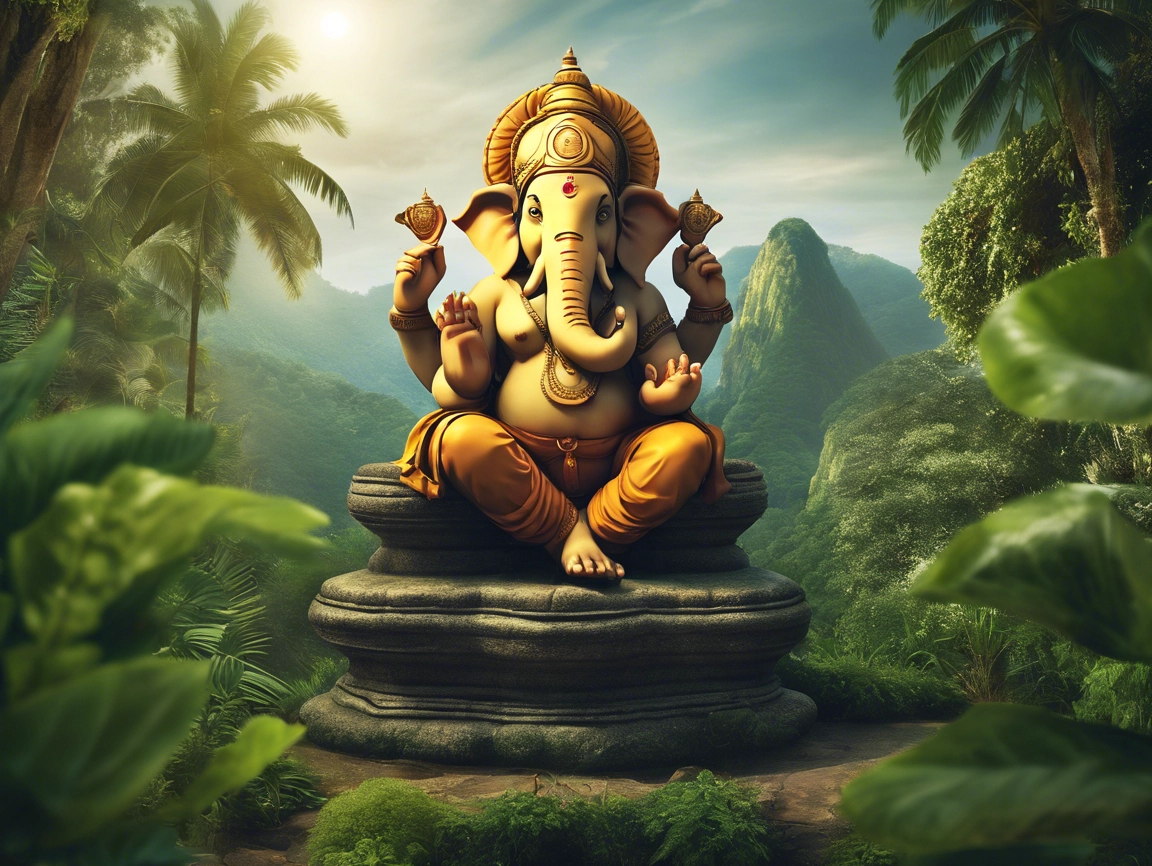
November arrived cloaked in the lingering fatigue of the previous month. The hurricane had passed, leaving behind a trail of physical and emotional debris. As we navigated the challenges of restoring normalcy – dealing with insurance claims, searching for new jobs, and simply trying to regain our footing – my foray into Hinduism began with an unexpected sense of detachment. Where October had been a whirlwind of activity and intense emotions, November felt strangely muted. My mind, preoccupied with worldly concerns, struggled to connect with the spiritual realm. I went through the motions, reading scriptures, attempting meditation, but a pervasive sense of disconnect lingered. It was as if a veil had been drawn between me and the divine, a veil woven from stress and uncertainty. Yet, as the month unfolded, I would discover that Hinduism, in its vastness and inclusivity, had a way of gently lifting that veil, revealing glimpses of profound wisdom and unexpected solace.
Hinduism, unlike many other religions, defies easy categorization. It’s less a religion in the traditional sense and more a tapestry of diverse beliefs, practices, and philosophies. This vastness, this inherent inclusivity, initially felt overwhelming. Where do you even begin when there are countless deities, myriad scriptures, and a seemingly endless array of rituals and traditions?
Yet, as I studied more, I began to appreciate the beauty of this diversity. Hinduism doesn’t demand adherence to a single dogma or a rigid set of rules. It offers a multitude of paths, each leading towards the ultimate goal of liberation (moksha).
What struck me most about Hinduism is its ability to embrace seemingly contradictory beliefs. It’s a religion that can accommodate atheists, agnostics, and polytheists alike. It honors the individual’s journey, recognizing that there are many paths to spirituality. This openness, this willingness to embrace diversity, is perhaps what makes Hinduism so enduring and relevant in today’s world.
Anniversary Reflections
November 1st marked our 10-year wedding anniversary. A decade of marriage, a milestone that echoed with both joy and a touch of melancholy. Our initial plans to celebrate in New York, was going to culminate in a visit to the largest Hindu temple outside of India. We were hoping to celebrate Diwali, the Festival of Lights, while there. Diwali is one of the biggest holidays in Hinduism and it symbolizes the triumph of good over evil, knowledge over ignorance, and hope over despair. It felt like a fitting backdrop for our anniversary, a celebration of light and resilience in the face of life’s challenges.
Life, as it often does, had other plans. The aftermath of the hurricane, coupled with the demands of job searching, had stretched our resources thin, both financially and emotionally. The grand celebration would have to wait. Instead, we stayed home and reflected on the journey that had brought us to this point, a journey marked by both profound connection and unexpected detours.
Our relationship, spanning 16 years, has been a tapestry woven with threads of love, laughter, and growth, but also with strands of conflict, heartbreak, and transformation. We’ve weathered storms both internal and external, emerging stronger and wiser with each passing year. In many ways, our journey mirrors the cyclical nature of life and death, creation and destruction, that is so central to Hindu philosophy.
Like the deities of the Hindu pantheon, who embody both benevolent and fearsome aspects, our relationship has contained multitudes. We’ve witnessed each other at our best and worst, embracing the full spectrum of human experience. And through it all, our love has endured, evolving and adapting as we ourselves have changed.
The move from Arizona to Asheville in 2020 was a particularly significant shift, and at times, an incredibly difficult one. It tested our resilience, forcing us to confront uncomfortable truths about ourselves and our relationship. But through it all, we fought for each other. We dug deep, doing the hard work of self-reflection and growth, both individually and as a couple. It felt like stepping onto a new stage, with new roles and new versions of ourselves appearing. It is as if we have been married four different times, but to the same person, because we’ve both grown and changed so much, especially in these past few years.
This constant evolution, this shedding of old skins and embracing of new selves, is reflective of the dynamic nature of love. It requires a willingness to let go of who we once were, to embrace the unknown, and to continually choose each other amidst the flux. It is a love that recognizes the impermanence of all things, even within ourselves, and finds joy in the dance of transformation.
The postponement of our anniversary trip felt symbolic of this ongoing evolution. It was a recognition that our celebration wasn’t confined to a single day or a specific location. It was a continuous process, a testament to the enduring power of love and commitment in the face of life’s uncertainties.
Navigating the Divide
The aftermath of the election brought a wave of conflicting emotions. While I personally find myself disillusioned by the dichotomy of the current political system, I do not feel the overwhelming dread of one party winning over another. However, I couldn’t escape the heightened tension that permeated the collective atmosphere during this election. Conversations with friends and neighbors revealed a big divide, fueled by fear and mistrust.
Witnessing these polarized perspectives, I was struck by the power of fear to distort our perceptions and create false dichotomies. Both sides seemed trapped in a narrative of “us versus them,” demonizing the opposition and overlooking the shared humanity.
Lately, it seems like many people are more invested in hindering “the others” than in promoting their own beliefs. The news cycle is often so distorted that it focuses more on the perceived misfortunes of the opposing side than on celebrating the achievements or positive aspects of their own. This obsession with the “other” creates a breeding ground for fear and animosity, hindering progress and preventing meaningful dialogue. It’s like watching a sports game solely to revel in the opposing team’s failures, blinded to the joy of your own team’s successes. This negativity ultimately harms everyone, creating a toxic environment where genuine connection and collaboration become impossible.
This tendency to divide the world into good and evil, righteous and wicked, is something Hinduism actively challenges. The Hindu worldview recognizes the inherent complexity of reality, acknowledging that light and darkness, good and evil, are intertwined and inseparable. Even the deities embody both benevolent and fearsome aspects, reflecting the multifaceted nature of existence.
The Bhagavad Gita, a central text in Hinduism, encourages us to transcend the duality of likes and dislikes, attachment and aversion. It reminds us that true wisdom lies in recognizing the divine spark within all beings, regardless of their beliefs or actions.
This message reverberated with me as I navigated the pre and post-election landscape. Instead of being swept up in the tide of fear and division, I sought to cultivate understanding and compassion, recognizing that both sides were driven by a desire for a better future, albeit through different paths.
This commitment to non-judgment, to seeing the divine in all beings, aligns with the Hindu principle of ahimsa, non-violence. It’s a reminder that true peace and harmony can only be achieved when we transcend our differences and embrace our humanity.
Some have accused me of being neutral in my beliefs, mistaking my openness for apathy. But this couldn’t be further from the truth. My values are densely woven from many threads, a synthesis of diverse perspectives and experiences. This is not neutrality; it’s the opposite. It’s a conscious and deliberate choice, a commitment to embracing complexity and seeking truth wherever it may be found. My beliefs and values are not the property or claim of any single belief system; they are mine. In fact, if they did align 100% with only one party or ideology, I would be worried. It is in the spaces between, in the nuanced understanding of seemingly opposing viewpoints, that truth resides.
And when it comes to the core principles that guide my life—compassion, spirituality, justice, and the inherent worth of every individual—I feel passionately and am willing to fight for them.
While I acknowledge the potential for threats to our family system, I choose not to live in fear. I believe in the resilience of the human spirit and the power of love to overcome adversity. If the need arises, we will adapt and find a new path, but for now, I choose to focus on building bridges of understanding and fostering a sense of unity within our community.
Manifesting Dreams
Despite the lingering anxieties of November, a spark of hope kept buring. The upheaval of recent months had prompted a period of introspection, forcing me to re-evaluate my priorities and aspirations. What truly mattered? What kind of life did I want to create for myself and my family?
In October, while visiting Dallas, I found myself drawn to the idea of vision boarding, a practice I had previously dismissed as mere wishful thinking. Armed with a stack of sticky notes, I spent hours in my hotel room mapping out my career goals and aspirations. This impromptu vision board, born out of a need for clarity and direction, felt surprisingly empowering.
Upon returning to Asheville, I shared my experience with the Wilder community, and the idea for a vision board party was born. Guided by the wisdom of Martha Beck, we gathered to craft visual representations of our dreams and desires. What surprised me most was the focus on travel and connection that emerged on my board. I knew there were places I was meant to see, and there are friendships I have yet to find. Images of far-off lands and meaningful encounters filled the space, reflecting a yearning for exploration and authentic relationships.
Within weeks, these seemingly distant dreams began to materialize. Opportunities for travel arose, and new connections blossomed, mirroring the very images I had placed on my board. This unexpected manifestation sparked a sense of wonder and a renewed belief in the power of dreaming.
Hindu philosophy teaches that our thoughts and desires have the potential to shape our reality. By consciously directing our energy towards our goals, we can bring them into existence. It is a touch of synchronicity and a lot of work. This is called Sankalpa.
The vision board served as a tangible representation of my Sankalpa, a visual reminder of my aspirations. By focusing on these images, I was essentially engaging in a form of Dharana, concentrated meditation, directing my mental energy towards the realization of my dreams.
Journey to Rio
As November unfolded, a sense of urgency grew within me. Overhearing a conversation between John and his parents, I realized the depth of his struggle with depression following his job loss. He was lost, questioning his identity and purpose. I had been there just a few short years ago. It was clear he needed a lifeline, an escape from the weight of uncertainty and self-doubt.
Spontaneity has always been our antidote to stagnation, and in that moment, I knew a trip was essential. With Elli and Olivia safely under the watchful eye of our neighbor, Kathleen, we set off with no destination in mind, only a desire for John to breathe, heal, and rediscover himself. I wanted a touch of that for myself as well.
When I told him we were leaving that weekend, he wept. Even as we drove to the airport, our destination remained unknown. I had scoured flight options, and a few sparked intrigue, but the final decision was made in the Charlotte airport: Rio de Janeiro. It felt right – new, vibrant, and brimming with the kind of adventurous spirit we both craved.
Rio was a revelation. The city pulsed with life, its beauty radiating from its people, its culture, and its breathtaking landscapes. We immersed ourselves in the vibrant energy, exploring hidden corners, savoring delicious cuisine, and connecting with locals whose warmth and generosity touched our souls.
One evening, we attended a spectacular dinner show celebrating the magic of Brazilian culture. The music, dancing, and vibrant costumes were captivating, but our experience was momentarily disrupted by a boisterous group at the neighboring table. Their exuberant singing, dancing, and conversation, while undoubtedly a joyful expression of their cultural norms, clashed with our American sensibilities.
In a moment of frustration, John exclaimed, “Stop!” The group fell silent, their faces etched with surprise and disappointment. As the initial irritation subsided, a wave of remorse washed over John. He realized his reaction stemmed from a cultural misunderstanding, a failure to appreciate the diverse ways in which people express joy and celebrate life. A lack of cultural empathy.
He got up, approached their table and apologized profusely, and despite the language barrier, a heartfelt exchange of “sorrys” ensued. By the end of the evening, we had forged a connection with this lively group, sharing laughter and a samba. We even made plans to meet in New York the following year.
This experience was a powerful reminder of the Hindu principle of Anekantavada, the acceptance of multiple perspectives and the understanding that no single viewpoint holds the complete truth.
One rainy afternoon, confined to our Airbnb, we found ourselves drawn to a familiar ritual. Just as I had done weeks earlier in Dallas, we spread out sticky notes, this time mapping out John’s career aspirations. This shared exercise in envisioning the future felt profoundly connecting, a show of our commitment to supporting each other’s growth and dreams.
What surprised me most was how this spontaneous journey to Rio mirrored elements of the vision board I had created just weeks earlier. Images of vibrant cultures, close connections, and unexpected adventures had seemingly sprung to life. It was as if the universe had conspired to orchestrate this experience, confirming the power of intention and the interconnectedness of all things.
Even the smallest details seemed to align with my vision. In my coaching course, we had been studying marmoset monkeys, fascinated by their inquisitive nature and zest for exploration. I had adopted their spirit, embracing curiosity and seeking out new experiences. And there, amidst the lush greenery of Rio’s Tijuca Forest, I encountered a family of marmosets in the wild, their playful antics mirroring the very essence of the lessons I had been learning. I had no clue they could be found here. What an unexpected surprise.
This encounter felt like a divine wink, a confirmation that I was on the right path. It was as if Ishvara, the guiding force that pervades the universe, had orchestrated this encounter to remind me of the interconnectedness of all things and the power of intention to shape our reality.
The Rio trip was a wonderful reminder of the healing power of travel and the importance of embracing spontaneity. It was a reminder of our ability to rediscover ourselves amidst life’s challenges. And it was a profound confirmation of the Hindu principles of interconnectedness, intention, and the guiding hand of the divine.
A Celebration of Sparkle
Our recent trip to Rio had rekindled a sense of joy and gratitude, and we were eager to share that with our loved ones. Months earlier, we had planned a “sparkles party” for the holiday season, and now, with our hearts full and spirits bright, it was time to bring that vision to life.
The invitation was simple: adorn yourself in all things sparkly, and come prepared to celebrate the upcoming holidays. Our home transformed into a glittering wonderland, with twinkling lights, shimmering decorations, and a playlist of festive music that filled the air with cheer.
Champagne flowed, laughter echoed, and the air buzzed with joyful conversations. While not all of our dear friends could join us, the presence of those who did filled our hearts with warmth and gratitude.
This gathering felt like a manifestation of Sangha, the importance of community and shared experience in the spiritual journey. Surrounding ourselves with loved ones, celebrating life’s simple pleasures, and creating a space for joy and connection felt nourishing. “Repeat the sounding Joy” kept coming to mind. I am ready for the holidays to start.
Shiva’s Dance
Amidst the whirlwind of change and uncertainty, a quiet shift continued to take place. I found myself developing a newfound appreciation for imperfection, a growing acceptance of life’s unpredictable nature. The meticulously crafted plans, the carefully constructed expectations – they no longer held the same power over me.
The hurricane, the job losses, the unexpected detours – they had chipped away at my illusion of control, revealing the beauty of surrender. I began to see imperfections not as flaws, but as steps towards transformation.
This shift in perspective resonated with the Hindu concept of Anitya, the impermanence of all things. Hinduism teaches that change is the only constant, and that clinging to rigid expectations only leads to suffering. By embracing the ebb and flow of life, we can find peace and liberation.
Just as the dance of creation and destruction is an integral part of the cosmic cycle, so too are the ups and downs of our personal journeys essential to our growth. The challenges we face, the unexpected turns in the road, they all contribute to the richness and complexity of our lives.
This dance of life and change is beautifully embodied in the image of Shiva Nataraja, the cosmic dancer. Shiva’s dance is a dynamic interplay of creation and destruction, a constant flow of energy that sustains the universe. He dances within a circle of fire, symbolizing the cyclical nature of time and the continuous process of renewal.
With one hand, he beats a drum, representing the rhythm of creation. With another, he holds a flame, symbolizing the fire of destruction that clears the way for new beginnings. His third hand points towards his raised foot, representing liberation from the cycle of birth and death. And his fourth hand is held in a gesture of reassurance, offering protection and blessings to his devotees.
Shiva’s dance is a reminder that both creation and destruction are necessary aspects of life. Just as the forest fire clears the way for new growth, so too do our challenges and setbacks create space for transformation and renewal. By embracing the dance, by surrendering to the flow of life, we can find harmony amidst the chaos.
Acceptance of imperfections extendeds beyond external circumstances. I found myself becoming more compassionate towards my own shortcomings, embracing my flaws and recognizing them as integral parts of my human experience. This self-acceptance, is part of Atman, or true self. Atman is considered to be eternal and unchanging, a spark of the divine that resides within each of us. By recognizing and honoring my Atman, I was acknowledging my inherent worthiness and embracing the totality of my being, imperfections and all.
This newfound appreciation for imperfection brought a sense of liberation. It freed me from the tyranny of expectations, allowing me to embrace the present moment with greater ease and joy. It was a reminder that life is not about striving for an unattainable ideal, but about finding beauty in the journey, in the messy, imperfect, and ultimately perfect unfolding of our lives, a dance guided by the rhythm of Shiva’s cosmic dance.
Rasa is Alaukika
My journey through Hinduism also deepened my appreciation for the arts, not just as a source of entertainment, but as a powerful tool for emotional and spiritual exploration. This newfound understanding was crystallized through the concept of Rasa, a central tenet of Indian aesthetics.
Rasa, often translated as “essence” or “flavor,” refers to the aesthetic experience evoked in the audience through a work of art. It’s the emotional response that arises from engaging with a piece of music, a dance performance, a painting, or any other form of artistic expression.
Rasa is not simply a passive reception of emotions; it’s an active and transformative experience. It involves a connection between the artist, the artwork, and the audience, creating a shared space where emotions are explored, amplified, and ultimately transcended.
As an avid consumer of the arts, rasa was everywhere. Whether I was lost in the intricate melodies of classical music, captivated by the expressive movements of a dance, or moved by the vibrant colors of a painting, I felt a profound connection to the emotions being conveyed by the art.
The concept of Rasa helped me understand why certain works of art resonated with me more than others. It wasn’t simply about technical skill or aesthetic beauty; it was about the ability of the artwork to evoke a specific emotional response, to tap into a universal human experience.
Hinduism identifies nine primary rasas: Shringara (love), Hasya (laughter), Karuna (compassion), Raudra (anger), Veera (courage), Bhayanaka (fear), Bibhatsa (disgust), Adbhuta (wonder), and Shanta (peace). Each rasa offers a different flavor, a unique emotional landscape to explore.
And within these rasas, there exists a fascinating distinction between laukika rasa and alaukika rasa. Laukika rasa refers to ordinary, worldly emotions that we experience in our daily lives. Alaukika rasa, on the other hand, transcends the mundane. It’s a heightened emotional experience, often described as spiritual or divine in nature.
Alaukika rasa is the kind of emotion that transports us beyond ourselves, connecting us to something larger than our individual existence. It’s the feeling of awe and wonder when witnessing a breathtaking natural phenomenon, the sense of transcendence when listening to a soul-stirring piece of music, or the profound empathy that arises when connecting with a work of art on a emotional level. Growing up, we called it feeling “the spirit.”
Alaukika rasa resonated with my own artistic experiences. There were moments when a piece of music, a movie, or a piece of artwork would move me to tears, evoke a sense of profound peace, or fill me with an inexplicable joy. These were not ordinary emotions; they were glimpses into a realm beyond the everyday, a taste of the divine.
It’s as if my capacity for experiencing the divine, for connecting with the transcendent, has expanded exponentially. The world has become a richer, more vibrant tapestry of emotions, and the arts have become a portal to new and diverse levels of understanding and connection.
My exploration of Rasa not only heightened my existing love for the arts but also expanded its horizons. I found myself drawn to new forms of artistic expression, seeking out experiences that would evoke a wider range of emotions, particularly those that touched upon the alaukika. Music, always a source of solace and inspiration, took on new dimensions. I even embarked on a new creative endeavor – sewing and embroidery. The process of imbuing raw materials with my own creative vision, felt very satisfying. It was a tangible way to connect with the artistic spirit, to express myself through the creation of something beautiful and functional.
Rasa illuminated the transformative power of the arts. It’s a power that transcends entertainment, offering a pathway to self-discovery, emotional healing, and spiritual growth. By embracing the aesthetics of emotion, we can unlock a broader understanding of ourselves and the world around us, and perhaps even glimpse the divine through the lens of artistic expression.
Thanksgiving
The aroma of simmering cranberries, infused with wine and Grand Marnier, filled the kitchen. It was Thanksgiving Day, and for the first time in years, I felt a sense of excitement instead of dread. This Thanksgiving was different. This Thanksgiving was mine, and I was determined to do it my way.
For years, Thanksgiving had been a source of stress. Days of cooking, and mountains of dishes. All for what felt like a visit by the Tasmanian Devil, a whirlwind rushing in, gorging to excess and then rushing back out. Even after marrying John, who shared my aversion to the holiday’s excesses, the burden didn’t lessen. With multiple families to please and the added challenge of our vegetarianism, Thanksgiving became a logistical nightmare. We eventually opted out altogether, preferring a quiet brunch when we lived in Phoenix. We found it was easier to say no to everything than yes to anything and feeling guilty about all the other people we were letting down.
But here in Asheville, finding a Thanksgiving tradition proved difficult. With Elli, joining us this year, we felt a responsibility to give her a taste of a “real” American Thanksgiving.
Instead of letting the old anxieties take over, I decided to approach this Thanksgiving with a new mindset. It wasn’t about fulfilling anyone’s expectations; it was about reclaiming the joy of cooking. And so, I set two ground rules: no help and no complaints.
Armed with my favorite show tunes playlist, I took over the kitchen. From 8:30 am until 2 pm, I chopped, stirred, and sautéed, belting out lyrics with abandon. Mashing potatoes and mashing the high notes. I made rolls, green bean casserole, a truly fantastic stuffing, and booze soaked cranberries – each dish a symbol of my newfound Thanksgiving spirit.
The turkey, the only dish I did not cook, arrived a few hours later. By then, some of the food wasn’t at its peak, but surprisingly, I didn’t care. My Thanksgiving had already happened. It was in the hours spent lost in the rhythm of cooking and singing, creating a feast fueled by joy, not obligation.
As we gathered around the table with my little family and friends, I realized that Thanksgiving wasn’t about achieving some idealized version of the holiday. It was about finding your own way to celebrate, and for me, that meant embracing the simple pleasures of cooking and sharing a meal with people I cared about. Plus, there was a kick ass show that I put on for myself while I cooked.
Finding Union Through Yoga
Amidst the whirlwind of November, with its emotional highs and lows, I enjoyed exploring the true meaning of yoga. It was not the physical postures and breathing exercises, yoga, in its truest sense, is about uniting the individual self (Atman) with the universal consciousness (Brahman). It’s about yoking oneself to the divine, achieving a state of harmony and interconnectedness.
This concept resonated with my experiences as I navigated the challenges and uncertainties of the month. The idea of finding union with something larger than myself, of connecting to a source of infinite wisdom and peace, offered a sense of solace and grounding.
In Hindu teachings, yoga is described as a path to liberation, a way to transcend the limitations of the individual self and experience the boundless nature of the divine. It is a process of aligning the body, mind, and spirit, of cultivating inner peace and harmony.
Even though my exploration of yoga during this month was primarily theoretical, it had a delightful impact on my understanding of Hinduism. It highlighted the interconnectedness of all things, the idea that we are all part of a larger cosmic dance. It also emphasized the importance of inner work, of cultivating self-awareness and seeking union with the divine.
Reflections
My journey through Hinduism has been a wonderful exploration of the divine in its myriad forms. From the concept of dharma to the transformative power of rasa, Hinduism has offered me a rich tapestry of wisdom and insight. While I confess that I struggled to connect with Hinduism on a conscious level for much of the month, preoccupied as I was with the aftermath of the hurricane and the anxieties of job searching, looking back, I realize that it seeped into me in subtle yet profound ways.
Hinduism has challenged my preconceived notions about religion and spirituality. It has opened my heart and mind to new possibilities, inviting me to embrace the full spectrum of human experience, from the depths of sorrow to the heights of joy.This month with Hinduism has been one more step on my spiritual journey, a journey that continues to unfold in unexpected and beautiful ways. I am grateful for the wisdom and insights it has offered, and I look forward to the transformative experiences that lie ahead. While I haven’t achieved enlightenment, obviously, I feel a growing sense of clarity and purpose, a deeper connection to the things that matter. And, I am losing my connection to stuff, the things that don’t matter.
Leave a Reply