
By Brock
In a world saturated with noise and distraction, the yearning for meaning and connection runs deep. This is the first month of my year-long exploration into diverse spiritual paths, a quest to uncover the wisdom and practices that resonate most profoundly with my soul.
Years spent immersed in the academic study of religion had ignited a thirst for experiential knowledge. The sacred texts, philosophies, and historical narratives had become familiar, but I yearned for a deeper, more visceral connection to the living faiths of the world. This journey was born from a desire to step out of the classroom and into the heart of religious practice.
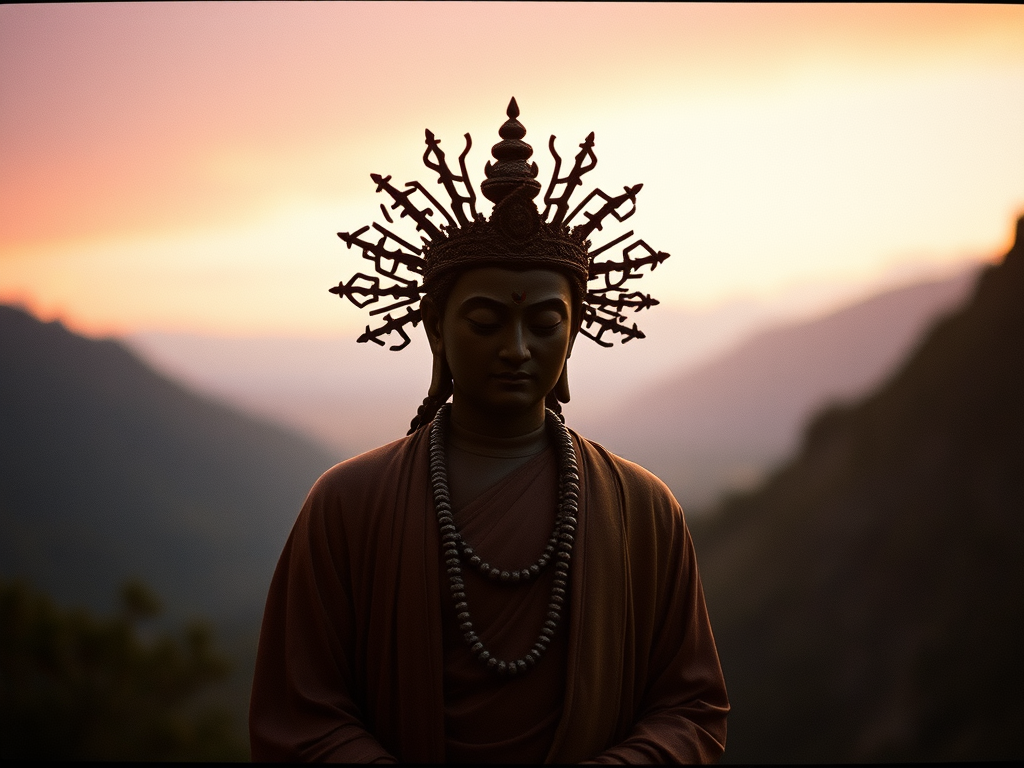
I began this journey with a mix of curiosity, and a touch of desperation. The promise of inner peace and personal growth was alluring, yet I was wary of falling prey to spiritual clichés. Buddhism was my first stop, a gentle introduction to mindfulness and compassion. But it was just the beginning of a much larger adventure.
Over the following twelve months, I will immerse myself in a variety of religious and philosophical traditions, from the ancient wisdom of the East to the contemporary spirituality of the West.
A Year of Embodied Faith
This first post is an invitation to accompany me on a year-long pilgrimage. It is a record of my attempts to walk the paths trodden by billions, to experience firsthand the joys, challenges, positives and negatives of diverse spiritual traditions. My intention is not to convert or proselytize, but to foster a deeper appreciation for the rich tapestry of human belief. I aim to magnify the beauty and compassion found within each faith, while also acknowledging their shortcomings and the potential for harm.
These posts are more like a chapter of a book, perhaps they will be, someday. They are not a definitive guide to spirituality, nor do they claim to offer answers. Instead, it is an invitation to accompany me on this journey of self-discovery. Together, we will explore the common threads that unite these diverse paths, and perhaps even find a spark of inspiration for our own spiritual exploration.
Why Start with Buddhism?
Embarking on this curious odyssey of exploring twelve religions in twelve months is a daunting and exhilarating endeavor. I needed a soft place to begin. The first step was crucial, a foundation for the journey ahead. Buddhism, with its emphasis on mindfulness, compassion, and the pursuit of inner peace, seemed like the perfect starting point. It’s a religion that promises not to dictate, but to illuminate; to offer tools rather than commandments.
Buddhism isn’t about blind faith or rigid dogma. Instead, it’s an invitation to explore the depths of one’s own consciousness, to understand the nature of suffering, and to cultivate wisdom. It’s a gentle nudge towards enlightenment, a path that welcomes all seekers, regardless of background or belief. Unlike many religions that center around a divine figure or a strict moral code, Buddhism focuses on personal transformation. There’s no need for intermediaries or sacred texts to be the sole source of truth. The Buddha simply pointed the way, suggesting practices and insights that can lead to liberation from suffering.
As my first step on this road through religions, Buddhism’s emphasis on personal experience and understanding was appealing. It felt like a safe space to start this grand experiment, a place where I could look at the complexities of human existence without feeling pressured to conform to a particular worldview. Zen Buddhism, with its focus on direct experience and the cultivation of wisdom through meditation, was a natural starting point. The seeds planted during this initial phase would undoubtedly influence my subsequent journeys, particularly my exploration of Shinto, where nature and spirit are deeply intertwined.
What Are the Important Concepts of Buddhism?
Buddhism, a philosophy and way of life originating in India over 2,500 years ago, has profoundly influenced cultures across Asia and is increasingly gaining traction in the West. Founded by Siddhartha Gautama, the Buddha, it emerged as a response to the rigid social structures of the time. Unlike many religions, Buddhism doesn’t center around a divine figure or a strict set of dogma. Instead, it offers a practical path to liberation from suffering, or dukkha.
The core of Buddhist teachings lies in the Four Noble Truths: the acknowledgment of suffering, the identification of its cause as attachment, the possibility of its cessation, and the path to end it. The Noble Eightfold Path, a practical guide encompassing ethics, mental development, and wisdom, provides a roadmap for this journey.
Interestingly, many people practice Buddhism in conjunction with other religions. Its emphasis on personal experience and ethical living often complements other faith traditions. This inclusivity is a testament to Buddhism’s adaptability and its ability to resonate with a diverse range of individuals.
Another unexpected aspect of Buddhism is its perspective on relationships. I had assumed that the emphasis on impermanence would lead to a detached view of human connection. Instead, Buddhism encourages deep compassion and understanding. It’s about cherishing relationships while acknowledging their transient nature. While this understanding has brought a new depth to my connections, it hasn’t shielded me from the challenges inherent in human interaction. Building and maintaining meaningful relationships remains a delicate art, one that requires constant effort and growth.
Buddhism, in its essence, is a practical philosophy for living a fulfilling life. It offers tools and insights to navigate life’s challenges with wisdom and compassion. It’s a journey of self-discovery, a path towards inner peace, and a reminder of our interconnectedness with all beings.
Books I Read
While each book was insightful and helpful, those with stars are the books I would recommend for anyone who wants to understand the central focus on Buddhism and start their own practice.
*No nonsense Buddhism – Noah Rasheta
Public Zen, Personal Zen – Peter D Hershock
Zen mind, beginners mind – Shunryu Suzuki
A new way of thinking, a new way of being – Wayne W. Dyer
Buddha’s Brain – Rick Hanson and Richard Mendius
*The Heart of the Buddha’s Teaching – Thich Nhat Hanh
What Did I Wear
Nothing changed about my clothing or appearance besides wearing a long circle of chakra prayer beads on my wrist or around my neck. When things were stressful, I would take these and use them for breath work, focusing on each chakra, not for any mystical reason, but simply because I found it peaceful and calming. The beads also held a small lotus medallion. I like to hold this and remind myself how such a beautiful flower could grow from such dirty environments. This was a great reminder when things seemed too difficult.
The Journey Begins
The cornerstone of Buddhist philosophy is annica, the universal law of impermanence. Everything is in a constant state of flux; nothing is permanent. This concept, while seemingly bleak, is actually liberating when embraced. It encourages us to let go of attachments and find peace in the present moment. My journey into Buddhism began with a mix of enthusiasm and apprehension, as reflected in my July 1st entry of my journal: “It was an interesting first day. I had big plans to wake up early, go hiking, swimming, yard work, meditate and get lots of work done. Everything fell apart very quickly.” There were big fights with my 12-year-old daughter as we wrestled for dominance over who had more say over her phone usage. The initial days were marked by a struggle to balance idealism with practicality. Meditation, which I had anticipated as a serene escape, often felt more like wrestling with a hurricane. While I tried hard to sit and focus, my mind felt more like a roaring circus on a fast-moving train. I had so much I wanted to get perfect. I wanted to be able to tell myself I was gaining great insights and enlightenment, but those damn monkeys kept taking control of the gears.

Meditation
The initial days of meditation were a chaotic dance between aspiration and reality. Lofty plans for extended periods of undisturbed contemplation quickly collided with the demands of family life. Olivia, my spirited daughter, often served as an impromptu meditation teacher. Her boundless energy, while initially disruptive, became a catalyst for rediscovering the joy of playfulness. Her laughter was a reminder to lighten up, embrace the present moment, and be joyful.
I had an unusual breakthrough when it came to my mediation practices during those first few days. It came when John took Olivia to the store and the house was strangely quiet. I used that time to practice the piano. I had recently downloaded a medley of 52 Taylor Swift songs; it was over 40 pages of music. As I played, my mind slowly begun to focus away from the music, and on to life. I thought about my fights with my daughter and gained clarity and insight into moving pass them and helping both of us find equal ground on her phone use. I thought about the challenges with work and realized the path ahead might involve moving on to another job. I created goals, thought out my weekly plans and challenged my ideas of what it means to be in The Zone. This was not the typical clearing of the thoughts type of meditation, it was the specific. I was examining each thought and treating it like a delicate plant. Removing the dead parts and the weeds. Fertilizing that which needed to grow. All while accompanied by 45 minutes of Taylor Swift. The music provided a methodologic and melodic space which in turn created a mental “blank space.” It was a paradoxical experience, filled with sound yet devoid of mental clutter.
While Taylor Swift piano medley’s would at times provide a structure for focus, it was the spaces between the notes where true discovery unfolded. As I searched differing mediation practices, I began to notice patterns in my thoughts, recurring themes that surfaced like persistent melodies. The mind, I discovered, is a restless instrument, constantly tuning itself to new frequencies. Meditation became a tool for observing these mental fluctuations without judgment, a practice in equanimity.
Initially, the challenge lay in stilling the mind. Thoughts would arise like uninvited guests, demanding attention. I love guests, even difficult ones. It’s just a matter of learning how to combine my expectations with theirs.
I began to observe negative thoughts like passing clouds, without engaging with them. Smiling at them. I found the smile towards them to be so helpful. A gentle smile, and a gentle wave, as they floated past and vanished into the sky.
One particularly challenging aspect of meditation was the emergence of deep-seated emotions and memories. As I foraged deeper into the quieter recesses of my mind, I encountered buried feelings of anger, sadness, and fear. It could be a jarring experience at times. With each meditation session, I learned to approach these emotions with curiosity rather than judgment. By acknowledging them without attachment, I gradually found that I could sit with them. In these dark corners of my mind, it was like finding a stranger who was scared and lonely, only to realize it was someone I left there because I was unable to deal with them at the time. Metaphorically, we would light a fire, sit next to each other, and talk things out. It was a cathartic experience meeting these hurt parts of me. But, eventually, I was bringing old friends into the light.
Seven Factors
The path towards liberation, as outlined in Buddhist teachings, is illuminated by the Seven Factors of Awakening. These seven mental qualities, when cultivated together, lead to enlightenment. They are mindfulness, investigation of mental and physical phenomena, energy, rapture, tranquility, concentration, and equanimity. Thich Nhat Hanh refers to these like the branches of a tree, each is essential for the overall health and growth of the plant. Each will continue to grow, creating new offshoots, new leaves and times very different fruit. They take a lifetime to grow. I love a good plant analogy.
Mindfulness in Action
The cornerstone of the Eightfold Path and the first of the Seven Factors of Awakening is mindfulness, the practice of being fully present in the current moment. This is not merely an intellectual concept but a tangible skill that can be cultivated through consistent practice. My July 9th journal entry gives a simple example of this in action: “I am learning to be more Zen in the small moments. Like sitting with my daughter during her dentist appt. My inclination is to look at my phone. Instead, I put it down and I was present. By choosing presence over distraction, I created a space of connection for my daughter and I was able to enjoy her sweet silliness that comes when she has nervous energy.
A Dream
One night, a particularly vivid dream jolted me from sleep. I rarely dream, but this one was unsettling. In a stark, white hospital room, a doctor proposed a bizarre procedure: removing parts of my brain responsible for adventure and change, claiming it was essential for others’ well-being. Despite initial compliance, something felt deeply wrong. I realized these qualities were integral to my identity, the very essence of who I am. Refusing the procedure, I escaped the hospital as others pursued me. I woke up laughing. The dream was strangely vivid, and absurd. But it made me feel like I was doing something very right. This dream became a symbolic representation of the external pressures that often dictate my life. It was a stark reminder of the subtle ways in which I allow others to influence my decisions, even when they are well intentioned.
The Buddhist concept of atta, or self, offered a lens through which to examine this dream. It is a reminder that each individual is a unique and valuable entity. By surrendering to the doctor’s demands, I would have been compromising my sense of self, allowing external forces to define my identity. This dream served as a wake-up call, urging me to prioritize my own needs and desires.
Cultivating a strong sense of self is essential for navigating life’s challenges. It requires discerning between genuine needs and externally imposed expectations. By honoring our own paths, we empower ourselves to make choices aligned with our values and aspirations. The dream, while strange, was a catalyst for personal growth, prompting me to examine my own patterns of behavior and to reclaim my agency.
Non-Attachment and Healthy Relationships
A common misconception about Buddhism is that it promotes detachment from all things, including relationships. While non-attachment is indeed a central tenet, it is essential to distinguish it from detachment. Non-attachment implies letting go of clinging to outcomes and expectations, while cultivating a sense of equanimity. It does not equate to emotional distance or indifference.
Buddhism encourages us to cultivate healthy relationships based on compassion, understanding, and interdependence. By letting go of harmful attachments, we create space for authentic connection. This doesn’t mean severing ties but rather shifting our perspective. As the Buddha taught, everything is interconnected. Our actions ripple outward, affecting those around us. Therefore, cultivating healthy relationships is not just a personal benefit but a contribution to the collective well-being.
Food as a Path to Mindfulness and Well-being
My relationship with food has long been a complex one, oscillating between indulgence and deprivation. I yearn for a more mindful and balanced approach. Buddhism offers a framework for cultivating a healthier relationship with food, emphasizing awareness, gratitude, and moderation.
I established a set of personal guidelines to support my mindful eating practice. Each time I eat, I try to follow five simple rules:
- Take a moment to be grateful. Acknowledging the abundance in my life and the effort involved in bringing food to my table creates a sense of appreciation.
- Imagine what it took to get the food to me. This practice fosters a deep respect for the earth, farmers, and everyone involved in the food production process.
- Breathe. Taking a moment to breathe before eating helps to ground me in the present moment.
- Chew and taste. This simple act allows me to fully savor the flavors and textures of the food, enhancing my enjoyment and satisfaction.
- If in a group, wait until all have enjoyed their first bite before I start (if possible). This practice promotes mindfulness and consideration for others.
By incorporating these practices I’m trying to change my mealtime into a ritual. It is no longer merely about satisfying cravings, but a pathway to greater self-awareness and connection to the world around me. It is not perfect. I still struggle. Like all things with Buddhism, I do it with a focus on growth, not perfection.
A Solitary Retreat
The islands of Turks and Caicos has been a sanctuary for both my physical and spiritual rejuvenation over the last five years.. A stark contrast to the frenetic pace of my daily life. The solitude of the aptly named Grace Bay, again offered an opportunity for introspection and personal growth this month. This trip coincided with an academic accreditation visit for the university where I work. My time here presented an unexpected juxtaposition of external demands and internal exploration. Ironically, my work, immersed in the expectation of Christian principles, also generated internal conflict.
Last year’s visit to this idyllic island had been a catalyst for significant life changes. It was here that I’d first contemplated shifting my scholarly focus towards exploring the intricacies of human belief systems. It was here that I also started focusing deeply on connections to my spiritual self, those in my life, and the world around me.
Returning to Turks and Caicos felt like revisiting a familiar friend. The island’s serene energy and slow nature, coupled with the solitude it afforded, allowed me to delve deeper into the Buddhist principles I had been cultivating.
Dissatisfaction and Detachment: journal entries from July 10th and 17th reflect my growing dissatisfaction with my job. The demands of the position clashed with my values, creating a sense of unease. Embracing the impermanent nature of situations, as described by annica, the impermanence of all things, became a powerful tool for navigating this internal conflict. By accepting that the situation wouldn’t last forever, I could detach from the outcome and focus on performing my duties to the best of my ability in the present moment. This shift in perspective brought a sense of peace and lessened the anxiety about the future. Letting go of the need for control, however, was initially difficult.
Right Livelihood and a Difficult Choice: My decision to leave my job, stemmed from a deeper understanding of right livelihood, another part of the eightfold path. The job increasingly conflicted with my values and sense of ethics. It no longer felt like a path that aligned with my personal growth. Leaving was a significant turning point. It involved letting go of security and venturing into the unknown. It was a difficult decision, but ultimately, it led to a clearer sense of purpose. Part of this became clear when I was asked to pray before dinner while at a busy restaurant during our first night with the accreditation group. It had been many years since I had prayed in public. I do not mind praying, but this prayer felt like it was part of the accreditation process. Like I was being judged on how I pray, how I say the words, and if I said the wrong words. It did not feel from the heart, it felt like I was simply trying to please those in front of me. All in the midst of loud restaurant clattering and Michael Jackson music
Solitude and Meditation: Surrounded by turquoise waters and pristine beaches, each night I would walk a few miles, sit and meditate. The initial adjustment to solitude was challenging. The constant chatter of the mind and the challenges of work were loud. However, with each passing day, the rewards became apparent. I returned from my trip with a renewed sense of clarity and purpose. The solitude had allowed me to peel back layers of external noise and connect with my inner voice.
Turks and Caicos has been a sanctuary for me over the years. Each visit, a transformative retreat. This trip, however, felt different. A sense of finality washed over me as I realized this might be my last visit. On my last day there, in the quiet solitude of the early morning, I watched the sunrise over Grace Bay. I was the only one on the beach. It was a sacred farewell. A moment of deep gratitude and reflection, as I prepared to embark on a new chapter. This experience in Turks and Caicos marked a significant shift in my life. It was a testament to the transformative power of Buddhist practice and the importance of introspective reflection. Through acceptance of impermanence, prioritizing right livelihood, and embracing solitude.
Confronting Emotional Turmoil
The 20th of July was a tempestuous day. I had just arrived home from Turks and Caicos and was confronted with a vast mix of expectations and problems. A confluence of personal and professional stressors created a storm of emotions. My natural inclination to fix problems and control outcomes was at odds with the impermanence of life’s challenges. My tendency to fix things, to find solutions and implement them, often hindered my ability to simply be with the discomfort. I found myself drawn to problem-solving mode, searching for a quick fix to alleviate the pain. This approach, while well-intentioned, often exacerbated the suffering. It was a difficult realization that sometimes, the most compassionate act is to allow the pain and the struggle to simply be, without trying to control or eliminate it. Again, sit with it, talk with it, get to know it until it is a friend.
The Power of Metta
Central to Buddhist practice is the cultivation of metta, or loving-kindness. This is not merely a sentimental notion but a powerful tool for transforming our relationships with ourselves and others. By extending warmth and compassion towards all beings, we create a foundation for inner peace and harmony.
The practice of metta, often referred to as loving-kindness meditation, involves cultivating feelings of goodwill towards oneself and others. This can be as simple as repeating phrases such as “may I be happy,” “may I be healthy,” and “may I be safe.” Then extending these same feelings to everyone around us. Over time, this practice can lead to a profound shift in perspective, softening the heart and opening it to greater compassion.
The experience of practicing metta was often accompanied by a sense of joy and well-being. Large crowds typically make me anxious and closed off. It only takes a few minutes for me to feel closed and ready to be back in the safety of my home or a small intimate setting. I am the most introverted extrovert I know. After practicing metta for a few weeks, I found myself sitting in a crowded space feeling an openness. Feeling a connection to those around. In Buddhism a positive emotional state known as rapture, is a natural byproduct of cultivating loving-kindness. It is a testament to the transformative power of this practice.
A Unexpected Detour: The Las Vegas Experiment
We had planned a trip to Japan, and I thought it would be the perfect way to end the month. A widespread computer glitch forced a change of plans, the only sure flight we could find was Las Vegas. While the initial disappointment was palpable, I quickly realized that this unexpected detour presented a unique opportunity for growth, and to see how far my inner peace could be tested.
Las Vegas, a city synonymous with excess and indulgence, offered a stark contrast to the serene landscapes of Japan. It was the perfect place for testing the mindfulness and equanimity cultivated through my Buddhist practice. The constant barrage of stimuli, from the flashing lights to the cacophony of sounds, challenged my ability to remain present and grounded. Yet, amidst the chaos, while here, the first of two big challenges that I would face over the upcoming weeks began to develop. They came to a head during the first few weeks of the following month. I will discuss them in detail as part of the next month. I can preview by saying we were defrauded out of over $20,000. Also, my credit card was stolen and dozens of charges applied to it. I spent hours during this trip talking with customer service representatives and salespeople. Yet, through all of this, I found moments of unexpected tranquility and so much joy.
Surprisingly, I thrived in the social energy of Las Vegas. Typically, large crowds and constant interaction would be draining, but the city seemed to invigorate rather than exhaust me. The ability to connect with people from diverse backgrounds was a refreshing change of pace. The food was more vibrant than I remember, the energy was intoxicating, the shows more lively. It challenged my preconceived notions about social interactions and expanded my understanding of human connection.
The juxtaposition of the planned and the actual itinerary forced me to confront the impermanence that is the cornerstone of Buddhist philosophy. It was a stark reminder that life is full of surprises and that clinging to expectations can lead to unnecessary suffering. The initial shock of the change was tempered by my fledgling ability to accept the present moment and finding the joy in what you are given.
Last Thoughts
This month-long exploration has been a transformative journey, marked by both challenges and profound growth. The integration of Buddhist principles into my daily life has cultivated a deeper understanding of myself, my relationships, and my place in the world.
Four lessons stand out at the end of this month:
1. The struggle to relinquish control and expectations was a recurring theme. The Buddhist concept of annica, the impermanence of all things, offered a framework for understanding this resistance. By accepting that life is in constant flux, I gradually learned to let go of rigid expectations and embrace uncertainty.
2. Equanimity, the ability to maintain balance and composure in the face of life’s ups and downs, was instrumental in cultivating this inner peace. It was a gradual process, requiring consistent practice and self-awareness. Cultivating equanimity transformed my relationship with challenges. I learned to respond with wisdom and compassion instead of reactivity. This shift brought a profound sense of inner peace.
3. The practice of mindfulness, or sati, became a cornerstone of my daily life. I developed a newfound appreciation for life’s simple pleasures. I learned to find joy in the simplest things. Practicing gratitude became effortless as I recognized the abundance in my life.
4. I found that cultivating metta had a profound impact on my relationships. By extending feelings of warmth and goodwill towards others, I experienced a deeper sense of connection and empathy. Conflicts seemed to dissolve as I approached situations with a more open and compassionate heart. The practice also had a positive effect on my self-esteem. By cultivating loving-kindness towards myself, I developed a greater sense of self-worth and acceptance.
The significance of this Buddhist journey lies in its ability to provide a framework for understanding the human experience. It has equipped me with tools to navigate life’s inevitable ups and downs with greater equanimity and wisdom. I am so very far from perfection. It is still a daily struggle to practice these teachings. But, I have the tools. While this month marks the end of a structured exploration, the practices and insights gained will continue to shape my path forward.
Leave a Reply